
India’s golden spice just became the golden ticket for exporters worldwide. If you’ve been watching the turmeric export market, you already know something extraordinary is happening—global demand isn’t just growing, it’s exploding. As someone deeply embedded in the spice export industry, I’ve witnessed firsthand how turmeric transformed from a traditional kitchen staple to a global wellness phenomenon worth $4.9 billion in 2025 and projected to hit $8.4 billion by 2035.
But here’s the game-changer: India doesn’t just participate in this boom—we absolutely dominate it, commanding a staggering 66% of theglobal turmeric trade. So what’s fueling this unprecedented surge? Let me break down exactly why turmeric export from India is experiencing record-breaking growth and how exporters like us are capitalizing on this golden opportunity.
India’s Unshakeable Dominance in Global Turmeric Trade
Let’s start with the numbers that matter. India exported 176,325 metric tons of turmeric last fiscal year, securing more than two-thirds of the entire global market. We’re not talking about marginal leadership here—India has consistently maintained over 60% market share for the past five years, despite brief volatility in 2022.
Maharashtra leads the charge, contributing a whopping $155.35 million in export value, with West Bengal and Kerala playing critical supporting roles. But here’s what really impresses me: turmeric exports are growing at a CAGR of 14%, and if this trajectory continues, we’re looking at 355,000 tons by 2025-26. That’s not incremental growth—that’s explosive expansion.
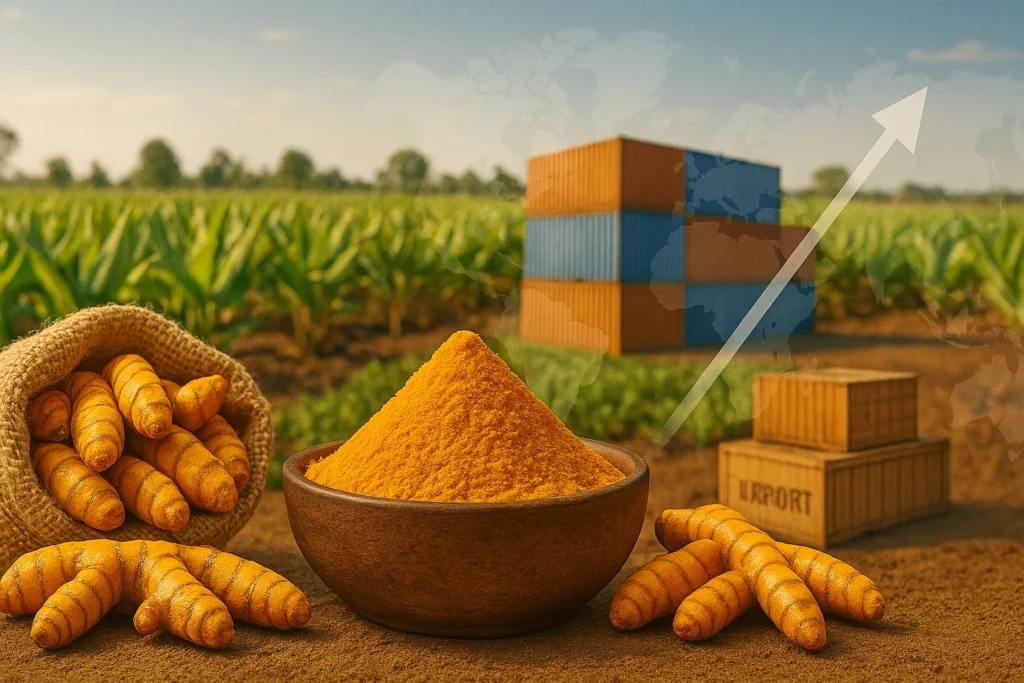
The export basket itself tells an interesting story. Turmeric powder now constitutes 45% of total exports, meaning we’re shipping approximately 159,750 tons of processed turmeric powder alongside 195,000 tons of raw turmeric. This value-addition strategy is precisely why Indian exporters are capturing premium margins in international markets.
Where India’s Turmeric Is Going
Understanding demand geography is critical for export success. Indian turmeric reaches over 150 countries globally, but six markets absorb 75% of our total exports. Let me break down the top destinations:
Bangladesh leads the pack, importing 49,522 tonnes in recent data, representing the single largest appetite for Indian turmeric. The proximity, cultural cuisine similarities, and established trade corridors make Bangladesh our most reliable customer.
United Arab Emirates comes in strong at 18% of our export share, with 12,182 tonnes shipped annually. The UAE serves as a crucial re-export hub, distributing Indian turmeric throughout the Middle East and North Africa.
United States accounts for 11% of exports, with 9,712 tonnes flowing into American markets. Here’s what’s fascinating—the USA isn’t just buying for traditional cooking. They’re driving the supplement and functional food revolution that’s transforming turmeric from spice to superfood.
Malaysia (9% share), Japan, Sri Lanka, UK, Morocco (8,522 tonnes), Germany ($7.7 million), Netherlands ($7.1 million), Saudi Arabia ($6.6 million), and Iran (10,964 tonnes) round out our major importers. Together, these three countries—USA, UAE, and Bangladesh—consume 55% of all global turmeric exports.
What strikes me most? These aren’t just spice markets anymore. They’re wellness markets, pharmaceutical hubs, and functional food innovation centers actively seeking India’s golden root.
The Wellness Revolution Driving Demand
This is where things get really exciting. The 40% demand surge isn’t coming from traditional curry consumption—it’s being turbocharged by the global wellness and functional food movement.
Curcumin: The Scientific Superstar
Turmeric’s active compound, curcumin (comprising 2-9% of turmeric preparations), has become the darling of medical research worldwide. Recent comprehensive studies confirm what Ayurveda has known for millennia: curcumin is “safe, well tolerated, and effective in preventing and treating a wide range of chronic diseases”.
Here’s what the latest clinical evidence shows about curcumin’s effects:
Anti-inflammatory powerhouse: Reduces inflammatory markers significantly, addressing the root cause of diseases like arthritis, metabolic syndrome, and cardiovascular conditions.
Chronic disease management: Moderate-quality evidence supports its use in relieving pain and improving physical function in osteoarthritis patients. It’s also effective for anxiety, hyperlipidemia, and oxidative stress.
Cancer prevention: Curcumin hinders cancer cell growth and tumor spread, showing particular effectiveness against breast, colon, and prostate cancers by protecting cells from DNA damage.
Cardiovascular benefits: Studies demonstrate positive effects on lipid profiles, blood pressure reduction, and overall heart health.
Mental wellness: Curcumin increases dopamine and serotonin levels, supporting mood management and potentially enhancing how antidepressants work for depression symptoms.
Metabolic health: Taking turmeric supplements can lower blood sugar, diastolic blood pressure, and triglycerides according to research reviews.
The pharmaceutical industry alone now accounts for over 50% of the worldwide turmeric market, with health foods, dietary supplements, and cosmetics consuming the rest. In fact, turmeric has become the best-selling botanical dietary supplement in the United States. That’s not a niche trend—that’s mainstream transformation.
Market Trends Fueling the Export Boom
Organic Turmeric Leading the Premium Segment
The global shift toward organic products is reshaping our entire industry. Consumers now demand organically cultivated turmeric, free from synthetic pesticides and fertilizers, willing to pay premium prices for certified organic products.
India is responding brilliantly. Farmers in North-Eastern states, particularly Meghalaya (home of prized Lakadong turmeric), are securing organic certifications supported by government initiatives. We’re implementing blockchain-based traceability systems that build trust with international buyers concerned about sustainability and origin authenticity.
Geographic Indication (GI) tagging of specific varieties like Erode turmeric and Lakadong turmeric positions them as premium, traceable, and authentic products in foreign markets. This branding strategy allows exporters to command higher margins while protecting India’s heritage varieties.
Value-Added Products Capturing Market Share
While raw turmeric remains in demand, the real growth is happening in value-added segments. Turmeric powder, capsules, essential oils, and curcumin extracts are experiencing explosive growth as consumers seek convenient consumption formats.
Enhanced bioavailability formulations—combining turmeric with black pepper (piperine) or lipid-based delivery systems—are particularly popular in USA and European wellness markets. Clean-label and organic variants dominate retail chains and online platforms, facilitating broad market access.
The emergence of turmeric-based beverages (golden milk, turmeric lattes), snacks, personal care products, and cosmetics provides diversified growth avenues beyond traditional spice applications.
Why India Wins This Race
Our dominance isn’t accidental—it’s built on fundamental competitive advantages:
Production scale: India produces turmeric across 14 states, creating a distributed network that’s resilient against localized disruptions from weather or pest issues. This geographic diversity ensures consistent supply year-round.
Quality varieties: Indian turmeric types—Madras turmeric, Alleppey turmeric, West Indian turmeric, Rajapore, and BKK—offer diverse curcumin content and flavor profiles suited to different applications. Alleppey turmeric, particularly prized for its high curcumin content (up to 5%), commands premium prices in pharmaceutical markets.
Price stability: Current FOB prices ranging €1.54–3.41/kg in August 2025 reflect ample inventories and optimistic supply outlook, making Indian turmeric competitively priced globally.
Robust infrastructure: Export corridors remain strong, with active trade supported by APEDA (Agricultural and Processed Food Products Export Development Authority) certification, quality testing facilities, and modern processing units.
Trust and consistency: Five decades of reliable supply have made global importers dependent on Indian crop developments. This established reputation creates switching barriers that protect market share.
Growth Projections: The Golden Decade Ahead
The numbers for the next decade are nothing short of spectacular. The global turmeric market is projected to expand from $4.9 billion in 2025 to $8.4 billion by 2035, advancing at a CAGR of 5.5%. That represents an absolute increase of $3.5 billion in market value over ten years.
By 2030, we’re looking at a $6.4 billion market, reflecting steady growth in the first half of the decade. Growth is expected to accelerate in the latter half as processed turmeric formats gain deeper penetration in packaged foods, nutraceuticals, and personal care markets.
Regional growth rates tell an interesting story:
China is expanding at 6.0% CAGR, supported by government initiatives promoting traditional medicine and natural health products. Their modernization of processing technologies and investments in organic cultivation create both competition and opportunity.
USA grows at 4.5% CAGR, propelled by increasing consumer awareness and demand for functional foods and dietary supplements. Extensive R&D focused on enhancing bioavailability keeps innovation flowing.
India itself benefits from rising domestic consumption alongside export growth, with wellness trends and integrative health approaches fostering turmeric adoption.
Export Opportunities for Indian Spice Companies
For exporters like Sadbhaav Spices, this boom creates multiple strategic opportunities:
Organic certification: Securing organic certifications opens premium market segments in USA, Europe, and Japan where consumers actively seek certified organic products.
Value-added processing: Investing in turmeric powder processing, curcumin extraction, and standardized supplement manufacturing captures higher margins than raw export.
Market diversification: While Bangladesh, UAE, and USA dominate current exports, emerging markets in North America, Central America, Latin America, and Africa present untapped opportunities.
Quality differentiation: Promoting specific varieties like Alleppey turmeric (high curcumin) for pharmaceutical applications or Madras turmeric for culinary use allows targeted marketing to different buyer segments.
Traceability systems: Implementing farm-to-export traceability using QR codes and blockchain technology addresses buyer concerns about authenticity and sustainability, particularly in premium markets.
Direct buyer relationships: With 3,603 turmeric manufacturers and exporters in India competing for attention, building direct relationships with importers, distributors, and end-users creates competitive moats.
Challenges to Navigate
Despite the rosy outlook, exporters must navigate real challenges:
Climate dependency: Monsoon progress across producing states remains a key variable for harvest quality and global supply stability. Weather disruptions can spike prices overnight.
Quality consistency: International buyers demand consistent curcumin content, moisture levels, and microbial safety. Implementing rigorous quality control systems isn’t optional—it’s essential for long-term relationships.
Competition: While India dominates, Southeast Asian countries (Thailand, Taiwan), Central America, and Latin America are growing their turmeric production, offering competitive pricing.
Regulatory compliance: Meeting pesticide residue limits, food safety standards (FDA in USA, EFSA in Europe), and import regulations requires constant vigilance and testing.
Price volatility: Brief price spikes, like those seen in 2022, can strain buyer relationships if not managed through transparent communication and contract structures.
Why This Growth Is Sustainable
Unlike speculative commodity bubbles, turmeric’s demand surge rests on solid fundamentals:
Scientific validation: Ongoing clinical trials worldwide continue demonstrating curcumin’s therapeutic benefits, reinforcing consumer confidence. The medical community’s embrace provides credibility that media hype alone cannot.
Diverse applications: Turmeric now serves pharmaceutical, nutraceutical, cosmetic, food processing, and traditional culinary markets simultaneously. This application diversity protects against single-sector downturns.
Demographic tailwinds: Aging populations in developed markets seek natural anti-inflammatory and cognitive support solutions—exactly what curcumin offers.
Clean-label movement: Consumer rejection of synthetic additives drives food manufacturers toward natural colorants and flavor enhancers, with turmeric perfectly positioned.
Integration into wellness routines: Turmeric has transcended trend status to become a wellness staple, appearing in everything from morning supplements to evening skincare routines.
Taking Action: Export Strategy for 2025-2026
For spice exporters ready to capitalize on this golden opportunity, here’s the strategic playbook:
Invest in organic farming partnerships: Secure reliable organic turmeric sources from certified farms in Maharashtra, Telangana, or Meghalaya. The premium pricing (often 20-40% higher) justifies the certification costs.
Develop value-added capabilities: Set up turmeric powder processing units that meet international food safety standards. Consider partnerships for curcumin extraction if capital allows.
Target pharmaceutical buyers: USA, Germany, and Netherlands pharmaceutical companies actively seek high-curcumin standardized extracts. Build relationships with nutraceutical manufacturers seeking reliable bulk suppliers.
Leverage GI-tagged varieties: If you can source Lakadong turmeric (Meghalaya) or Erode turmeric (Tamil Nadu), the GI tag provides powerful marketing differentiation in premium markets.
Implement digital marketing: With B2B buyers researching suppliers online, a strong digital presence with SEO-optimized content about your turmeric quality, certifications, and traceability creates inbound leads.
Attend international trade shows: Physical presence at SIAL Paris, Natural Products Expo West (USA), and Gulfood (Dubai) puts you directly in front of decision-makers from top importing nations.
The Bottom Line: India’s Golden Decade
The 40% demand surge in turmeric exports isn’t a flash in the pan—it’s the beginning of India’s golden decade in global spice trade. With the market projected to nearly double by 2035 and India firmly holding 66% global market share, exporters who position themselves strategically now will reap extraordinary rewards.
The convergence of scientific validation, wellness trends, organic demand, and value-added product innovation creates a perfect storm of opportunity. India’s production infrastructure, quality reputation, and five decades of export experience provide competitive advantages that rivals will struggle to replicate.
For Sadbhaav Spices and exporters across India, this isn’t just about shipping more containers—it’s about becoming essential partners in the global wellness revolution. Every turmeric root we export carries centuries of Ayurvedic wisdom validated by modern science, meeting the world’s hunger for natural, effective, and sustainable health solutions.
The golden spice is having its golden moment. The question isn’t whether to participate in this boom—it’s how aggressively you’ll capture your share of this $8.4 billion opportunity.
Ready to export premium turmeric to global markets? Sadbhaav Spices specializes in high-quality turmeric sourcing, organic certification, and reliable export services to 150+ countries. Contact us today to discuss bulk orders, custom blends, and partnership opportunities in this booming market.
Related Reading:
- Why Global Buyers Prefer India for Wholesale Spices
- Organic Spice Certification: Complete Export Guide
- Top 10 Spices Exported from India in 2025
Note: All statistics and market data cited are from verified industry sources as of November 2025. Market conditions and prices are subject to change based on harvest yields, weather conditions, and global demand fluctuations.