
India produces approximately 75% of the world’s turmeric and accounts for a significant share of global exports. However, what sets successful exporters apart is their understanding of exactly what quality means in international markets.
This isn’t about complicated jargon. It’s about three simple things buyers check before they pay premium prices—curcumin content, color intensity, and purity standards.
The Quality Triangle: What Buyers Actually Measure
1. Curcumin Content — The Gold Standard
Curcumin is what makes turmeric valuable. It’s the yellow compound that gives turmeric its color, health benefits, and market price.
What Different Markets Want:
- Nutraceutical & Pharmaceutical: Minimum 5% curcumin (premium varieties reach 7-12%)
- Food Industry: 2-4% curcumin is standard
- FSSAI Minimum: 2% curcumin for basic compliance
Why It Matters:
A turmeric powder with 6% curcumin sells for 30-40% more than one with 2%. Curcumin content is measured through HPLC (High-Performance Liquid Chromatography) testing, and buyers demand lab certificates proving the exact percentage.
Testing Requirement: Every serious buyer asks for a Certificate of Analysis (COA) from an accredited laboratory. No COA, no deal.
2. ASTA Color Value — Visual Quality Score
ASTA (American Spice Trade Association) color units measure how vibrant and yellow your turmeric powder is. Think of it as a quality score from 0-300+.
Market Standards:
- Below 100 ASTA: Low grade, limited buyers
- 100-150 ASTA: Standard export quality
- 150-200 ASTA: Premium grade
- 200+ ASTA: Super premium (rare, commands highest prices)
Why Food Companies Care:
Food manufacturers use turmeric as a natural colorant. Higher ASTA values mean they need less turmeric to achieve the same color, making your product more cost-effective for them.
3. Moisture Content — The Safety Parameter
Moisture content should be within 6-8% to avoid fungal growth. Most international standards cap it at 10-12% maximum.
What Happens With Excess Moisture:
- Mold and bacterial growth during shipping
- Product rejection at destination port
- Complete shipment losses
Export Standard: Keep moisture below 10%. Premium suppliers target 6-8%.
Indian Turmeric Grades: Know What You’re Selling
India grows 30+ turmeric varieties, but international markets recognize specific types based on origin and curcumin levels.
Premium Export Varieties
Alleppey Finger (Kerala)
Contains about 3.5% to 5.5% volatile oils, and 4.0% to 7.0% curcumin. This is the premium variety for USA and health product markets.
- Curcumin: 4-6.5% (sometimes up to 7%)
- Color: Deep orange to reddish-yellow
- Price Premium: 20-30% above standard varieties
- Best For: Nutraceuticals, dietary supplements, organic markets
Lakadong (Meghalaya)
The world champion of turmeric. Grown in pesticide-free, high-altitude farms with exceptional curcumin levels.
- Curcumin: 7-12% (highest globally)
- Premium: Commands 50-80% higher prices
- Market: Pharmaceutical companies, premium health brands
- Certification: Often sold as organic
Madras/Erode (Tamil Nadu)
The workhorse of international turmeric trade. Contains only 2% of volatile oils and 2% of curcumin, but offers vibrant color and consistent quality.
- Curcumin: 2-3.5%
- ASTA Value: 150-200 (excellent for food coloring)
- Market: Europe, Middle East, food manufacturers
- Volume: Largest export volumes globally
Rajapuri/Sangli (Maharashtra)
Mid-tier variety popular in Japanese markets.
- Curcumin: 3.5-4%
- Polished Form: Typically exported polished
- Market: Japan, Southeast Asia
Nizamabad Bulb (Andhra Pradesh)
Bulb variety with good commercial value.
- Form: Typically sold as bulbs (primary rhizomes)
- Curcumin: 1.5-2.5%
- Market: Bangladesh, Middle East
Understanding Finger vs. Bulb vs. Powder
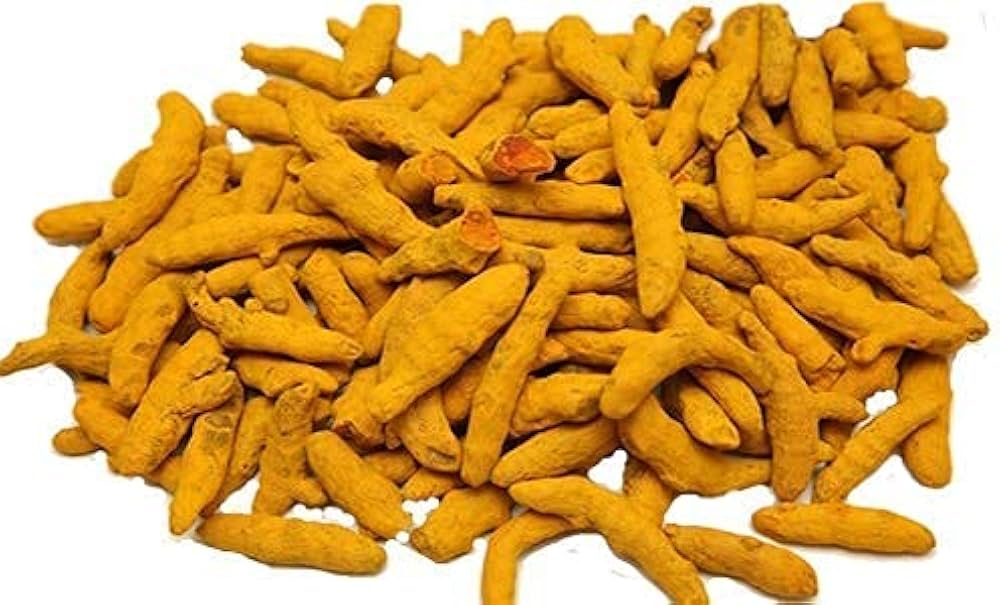
Fingers: Secondary rhizomes—cylindrical, curved, tapering. Premium form for whole spice exports.
Bulbs: Primary rhizomes—ovate, pear-shaped, more rounded. Generally lower price than fingers.
Powder: Ground turmeric. Most common export form. Easier for buyers to test and use immediately.
International Quality Standards Decoded
FSSAI Standards (India)
FSSAI mandates a minimum 2% curcumin content in turmeric and sets clear purity parameters:
- Moisture: Maximum 10%
- Total Ash: Maximum 9%
- Acid Insoluble Ash: Maximum 1.5%
- Extraneous Matter: Maximum 2%
- Curcumin: Minimum 2%
Critical: Product must be free from artificial colors (especially lead chromate—a toxic yellow dye sometimes illegally added), living insects, mold, and foreign starch.
ISO 22000 & HACCP
These certifications prove you have food safety management systems in place. ISO 22000 food safety management system certification and HACCP are increasingly expected by European buyers.
What They Cover:
- Contamination control during processing
- Traceability from farm to shipment
- Regular testing protocols
- Documentation systems
Market Impact: EU and USA buyers often make these certifications mandatory. Without them, you can’t enter premium markets.
European Union Standards
EU has some of the strictest standards globally:
- Maximum Residue Limits (MRL) for 500+ pesticides
- Heavy metal limits (lead, cadmium, mercury, arsenic)
- Aflatoxin limits
- Compulsory organic certification for organic claims
USA Standards (ASTA & FDA)
A reputable exporter must provide a Certificate of Analysis (COA) from a third-party laboratory verifying the exact percentage of curcumin and ASTA values.
FDA Requirements:
- Prior Notice for all food imports
- Heavy metal testing (especially lead)
- Microbial safety (Salmonella, E. coli)
- Clean label requirements
Essential Laboratory Tests Before Export
Every shipment should pass these tests to avoid rejection:
Mandatory Tests
Curcumin Content
- Method: HPLC testing
- Standard: Minimum 2% (FSSAI), 5%+ for premium
- Cost: ₹3,000-₹5,000 per sample
Moisture Analysis
- Method: Oven drying method
- Standard: Maximum 10-12%
- Cost: ₹500-₹1,000
Microbial Testing
Tests for Salmonella, E. coli, and yeast/mold are essential.
- Standard: Absence of Salmonella in 25g, E. coli <10 CFU/g
- Cost: ₹2,000-₹4,000 per sample
Heavy Metals
Ensuring levels of lead, arsenic, cadmium, and mercury are within safe limits.
- Lead: <2.5 ppm (critical for USA)
- Arsenic, Cadmium, Mercury: <1 ppm each
- Cost: ₹4,000-₹8,000 for full heavy metal panel
Optional But Valuable Tests
Pesticide Residue Analysis
- Multi-residue screening for 200+ pesticides
- Essential for EU and organic markets
- Cost: ₹8,000-₹15,000
Aflatoxin Testing
- B1, B2, G1, G2 testing
- EU limit: Total aflatoxins <4 ppb
- Cost: ₹3,000-₹5,000
Volatile Oil Content
- Indicates aroma quality
- Alleppey standard: 3.5-5.5%
- Cost: ₹3,000-₹5,000
Quality Certifications That Open Premium Markets
Essential Certifications
FSSAI License
Basic requirement for any food business in India. State or Central license needed for exports.
APEDA Registration
Mandatory for spice exports from India. Annual renewal required.
ISO 22000
Food safety management system. Mandatory if your turmeric is used in herbal medicinal products.
HACCP
Hazard Analysis and Critical Control Points. Required for EU and USA markets.
Premium Market Certifications
Organic Certifications
- NPOP (India Organic): Required base for Indian organic claim
- USDA Organic: Opens American organic market (25-30% price premium)
- EU Organic: For European organic buyers
Cost: ₹50,000-₹2 lakh for organic certification
Benefit: 25-40% higher selling prices
Fairtrade Certification
Proves ethical sourcing and fair farmer payments. Popular in Europe.
GMP (Good Manufacturing Practice)
Essential for pharmaceutical-grade turmeric.
Halal Certification
Not mandatory but preferred in Middle Eastern markets.
Processing Standards That Affect Quality
Critical Processing Steps
Boiling/Curing
Proper curing where rhizomes are boiled until soft retains curcumin and prevents discoloration. Under-cooked turmeric becomes brittle; over-cooked loses color.
Drying
Sun drying may take 10 to 15 days, and the rhizomes should be spread in 5-7 cm thick layers. However, mechanical drying at 60°C is preferred to prevent surface discoloration from direct sunlight.
Polishing
Manual or machine polishing removes outer skin and gives uniform appearance. Over-polishing can reduce weight and break fingers.
Storage
Store in cool, dry, pest-free warehouses. Use jute bags (25-50kg) for ventilation. Add silica gel packets for moisture control.
Fumigation
Fumigation needs to be done twice when raw material enters into godown and also when it packed and enters into containers.
Common Quality Issues & How to Avoid Them
Issue #1: Artificial Coloring
Some suppliers add lead chromate (toxic yellow dye) to enhance color. This is illegal and dangerous.
Prevention: Always lab test for lead. Reject any batch with lead >2.5 ppm.
Issue #2: High Moisture Content
Causes mold during transit, leading to complete shipment rejection.
Prevention: Test moisture before packing. Use moisture-proof packaging with silica gel.
Issue #3: Extraneous Matter
Foreign particles like stones, dirt, other plant material reduce quality.
Prevention: Multiple cleaning rounds, both manual and mechanical. Visual inspection before packing.
Issue #4: Inconsistent Curcumin Levels
Mixing different varieties or poor processing reduces curcumin content.
Prevention: Source single-variety turmeric. Test every batch. Maintain proper processing temperatures.
Issue #5: Pest Infestation
Insects in stored turmeric destroy entire shipments.
Prevention: Proper fumigation, sealed storage, regular inspection, quick turnover.
Pricing Based on Quality Grades (2026 Indicative Rates)
| Quality Grade | Curcumin % | FOB Price Range (USD/kg) | Target Market |
|---|---|---|---|
| Lakadong Premium | 8-12% | $6-$10 | Pharmaceutical, Premium Health |
| Alleppey Finger | 5-6.5% | $4-$6 | Nutraceuticals, Organic USA |
| Erode Best Quality | 3-4% | $2.50-$3.50 | Food Industry, Europe |
| Madras Standard | 2-3% | $2-$2.80 | Bulk Food Processing |
| Nizamabad Bulb | 1.5-2.5% | $1.80-$2.50 | Middle East, Bangladesh |
| Standard Powder | 2-3% | $2-$3 | General Export |
Note: Organic certification adds 25-40% premium. Prices fluctuate based on harvest, global demand, and exchange rates.
Quick Quality Checklist for Exporters
Before you ship, verify:
✅ Lab Testing Done
- Curcumin content verified (COA available)
- Moisture below 10%
- Microbial tests passed
- Heavy metals within limits
✅ Certifications Ready
- FSSAI license valid
- APEDA registration current
- Organic certificates (if claiming organic)
- ISO/HACCP if targeting premium markets
✅ Processing Quality
- Proper boiling and drying completed
- No artificial coloring added
- Cleaned multiple times
- Fumigation certificates available
✅ Packaging Standards
- Food-grade bags (jute/PP)
- Moisture-proof inner lining
- Silica gel packets included
- Proper labeling with batch number, date, curcumin %
✅ Documentation
- Certificate of Origin
- Phytosanitary Certificate
- Quality Test Reports
- Invoice and packing list accurate
The Bottom Line on Quality
Export quality isn’t about perfection. It’s about consistency and transparency.
Buyers pay premium prices for three things:
- Verified curcumin content (with lab proof)
- Consistent quality (every shipment matches specifications)
- Proper documentation (certificates that clear customs smoothly)
Focus on these fundamentals, test every batch, and choose reputable testing labs. Quality is your reputation in international markets—protect it fiercely.
About Sadbhaav Spices
At Sadbhaav Spices, we source premium turmeric directly from India’s top-producing regions, ensuring every shipment meets international quality standards. Our in-house testing facilities and partnerships with accredited laboratories guarantee that your turmeric clears customs smoothly and satisfies even the most demanding buyers. From Alleppey Finger to Erode premium grades, we provide complete quality documentation, competitive pricing, and reliable export support.
Need export-grade turmeric with verified curcumin content? Contact our quality team today.