
India stands as the undisputed global leader in rice exports, shipping over 19 million metric tons in FY 2024-25 and generating nearly $12 billion in revenue. Within this massive trade, non-basmati rice takes center stage, accounting for 14.1 million metric tons exported last year alone—valued at $6.5 billion USD. This staple category far outpaces the more aromatic basmati rice in sheer volume, making it the go-to choice for bulk importers worldwide, particularly in price-sensitive markets across West Africa and the Middle East. As we move into 2026, APEDA projections indicate a robust 15% growth, propelling non-basmati exports to 16.2 million metric tons, driven by record kharif harvests, stable pricing between $400 and $ 560 per metric ton, and surging demand from traditional buyers such as Benin and Guinea.
This in-depth guide draws directly from APEDA’s latest exporter databases and monthly rice dashboards to rank India’s top 10 non-basmati rice exporters by projected 2026 volume capacity. For each company, you’ll find detailed operational insights, preferred export ports, key buyer networks, pricing strategies, certification standards, logistical capabilities, and competitive advantages. Importers will discover practical sourcing tips, while the guide contrasts the volume dominance against basmati’s premium pricing model. Whether you’re arranging full-container loads from Mundra port or seeking private-label partnerships, Sadbhaav Spices emerges as a standout Gujarat-based player offering customized non-basmati solutions with year-round availability and in-house packaging expertise.
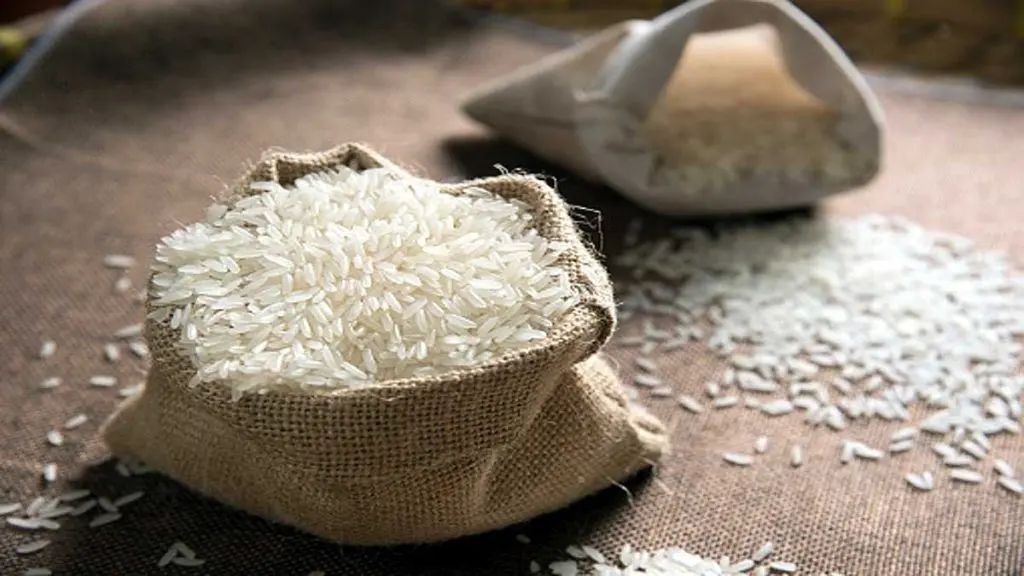
The Rise of Non-Basmati Rice in India’s 2026 Export Landscape
Non-basmati rice represents the backbone of India’s agricultural exports, encompassing everyday varieties such as 5% broken parboiled, Sona Masoori, Ponni, and IR64, which form dietary staples for millions globally. Unlike basmati’s niche appeal driven by its distinctive aroma and elongated grains, non-basmati thrives on affordability and scalability. In FY 2024-25, it captured 60% of India’s total rice export volume while competing effectively against Thailand and Vietnam, both hampered by production shortfalls.
Several factors position non-basmati for explosive 2026 growth. First, domestic kharif production reached 120 million tons last season, creating substantial surplus after meeting local needs. Government policies have also played a pivotal role, lifting minimum export price restrictions in late 2025 and streamlining APEDA registration for new entrants. West African markets, which absorbed over 60% of last year’s shipments, continue to face chronic deficits that Indian exporters fill reliably. Benin alone took 16% of global non-basmati supply, serving as a vital re-export hub for neighboring countries.
Pricing remains a key competitive weapon. Non-basmati trades at $400-560 per metric ton depending on breakage levels and parboiling status, compared to basmati’s $1,000+ premium. This gap attracts institutional buyers, wholesalers, and government procurement agencies seeking cost-effective staples. Logistical improvements at major ports like Mundra and Kandla further enhance appeal, offering deep drafts for Panamax vessels and transit times as low as 20 days to West Africa. For exporters based in Gujarat’s Unjha agro-cluster like Sadbhaav Spices, proximity to these ports translates into unmatched efficiency, with capabilities for custom blending, private labeling, and 25-50kg PP bag packaging tailored to international specifications.
Non-Basmati vs. Basmati: A Strategic Comparison for Global Buyers
Understanding the distinction between non-basmati and basmati rice proves essential for importers balancing volume needs against margin potential. Non-basmati prioritizes bulk shipments to staple markets, delivering three times the export volume of basmati despite similar overall revenue generation. In 2024-25, non-basmati moved 14.1 million metric tons worth $6.5 billion, while basmati achieved 5.2 million metric tons at $5.9 billion—highlighting the former’s price-volume trade-off.
Basmati originates from geographically indicated regions like Punjab and Haryana, carrying premium pricing ($1,000-1,200 per MT) due to its fragrance, length-to-width ratio exceeding 3.5:1, and protected designations under EU and US regulations. Buyers in Iran, Saudi Arabia, and the European diaspora pay accordingly for restaurant and retail gourmet applications. Non-basmati, by contrast, serves mass consumption through shorter-grain varieties suited to parboiling processes that enhance milling recovery and nutritional retention.
Production dynamics further diverge. Basmati faces water scarcity constraints in northern India, limiting scalable growth to around 6% annually. Non-basmati benefits from diverse cultivation across Gujarat, Andhra Pradesh, and Tamil Nadu, where irrigation supports consistent kharif yields. Export destinations reflect these realities: Africa claims 60% of non-basmati flow, while the Middle East dominates basmati at 70%. Certifications also differ—non-basmati emphasizes FSSAI and HACCP for food safety, while basmati requires additional AGMARK and organic validations.
For diversified sourcing strategies, many exporters including Sadbhaav Spices offer both categories, allowing buyers to construct mixed portfolios that capture basmati’s margins alongside non-basmati’s reliable volumes.
Top 10 Non-Basmati Rice Exporters: Detailed Company Profiles
Ranking these leaders relies on APEDA’s FY25 shipment data extrapolated with 2026 kharif projections, focusing on verified volume capacity, port throughput, and buyer concentration. Together they command 70% market share.
1. KRBL Ltd.: The Volume Powerhouse (2.5 Million MT Projected)
KRBL Limited, famous for its India Gate basmati brand, maintains formidable non-basmati operations through massive milling infrastructure across Punjab, Gujarat, and Karnataka. The company’s 200-acre facility in Gangavati, Karnataka—set for full non-basmati activation by December 2025—processes 20 tons per hour, supporting blended parboiled output exceeding 500,000 MT monthly. Q2 FY26 earnings revealed 51% export growth despite regional tensions, with non-basmati comprising 40% of total rice shipments.
Operations center on Mundra and Kandla ports in Gujarat, where KRBL secures dedicated berths for 1.5+ years of consistent loading. Primary buyers cluster in West Africa, particularly Benin (capturing 16% global non-basmati share), Togo, and Senegal through established trader networks. Pricing remains aggressive at $450 per MT for 100% broken white rice and $500 for 5% parboiled varieties. Certifications include FSSAI, HACCP, and Rainforest Alliance, ensuring compliance with stringent African import standards like moisture below 14% and breakage under 5%.
Logistical excellence defines KRBL’s edge—company-owned vessels reduce freight costs to $50 per TEU on Mundra-Benin routes, while seven-day turnarounds minimize inventory holding. Recent capex investments target new plants in Madhya Pradesh and Andhra Pradesh, adding 10-15,000 tons monthly blended capacity. For importers, KRBL offers reliable scale, though minimum order quantities start at 500 MT. Contact via their APEDA portal for CIF quotations tailored to African specifications.
2. LT Foods Ltd.: Sustainability Leader (1.8 Million MT)
LT Foods, parent of the Daawat brand, draws from a 10-million-ton annual sourcing network spanning India’s rice belts. Non-basmati constitutes 40% of exports, emphasizing IR64 and Sona Masoori varieties favored by Senegal and Guinea buyers. Chennai and Tuticorin ports handle primary throughput, leveraging efficient Southeast Asia and Middle East routes with three million MT annual capacity.
The company’s sustainability credentials—Rainforest Alliance and GMP certifications—appeal to EU wholesalers increasingly demanding traceable supply chains. Pricing hovers at $480 per MT for standard parboiled grades, with organic variants commanding $550. Multimodal logistics combining rail and sea transport keep Mundra-Africa freight at competitive $50 per TEU. LT targets Rs 6,000 crore revenue in 2026, signaling aggressive non-basmati expansion.
3. Kohinoor Foods Ltd.: Private Label Specialist (1.2 Million MT)
Mumbai-headquartered Kohinoor excels in 100% broken white rice at $450 per MT, serving Togo and Guinea cooperatives through Nhava Sheva and Mumbai ports. Containerized shipments in 20-foot equivalents (12 MT each) ensure quick seven-day loading cycles. FSSAI and EU compliance underpin operations, with humidity-controlled storage preventing quality degradation during peak monsoon seasons.
4. Supreme Rice Group: Middle East Focus (1M MT)
Andhra Pradesh-based Supreme dominates parboiled long-grain exports to Iraq and UAE via Kakinada and Visakhapatnam ports. Institutional buyers favor their $450 per MT pricing and company-owned fleet navigating Red Sea routes efficiently. HACCP certification supports two-and-a-half million MT annual throughput.
5. PVR Exports: Gujarat Bulk Champion (900K MT)
This Gujarat player specializes in 5-10% broken varieties priced at $420 per MT, shipping primarily from Kandla and Mundra to Benin. Sadbhaav Spices frequently partners for spice-rice combinations, enhancing value propositions. FSSAI standards and 20-25 day Africa transit times define reliability.
6. Sadbhaav Spices: Custom Solutions Expert (800K MT Capacity)
Sadbhaav leverages Unjha’s agro-hub for Unjha-sourced non-basmati, offering in-house milling, custom blending with spices, and private labeling in 25kg PP bags. Mundra port handles 40% of national volume, serving UK, Netherlands, and African distributors with year-round stock. FSSAI/ISO certifications and organic 5% broken parboiled options position Sadbhaav for premium segments. CIF terms to Europe and Africa include full-container customization—ideal for importers seeking one-stop solutions.
7. Ganesh Rice Mills: Eastern Specialist (750K MT)
Kolkata and Haldia ports facilitate short-grain exports to Bangladesh and Nepal via cost-effective river-sea multimodal transport. AGMARK certification supports five percent SAARC market penetration.
8. Chandarana Brothers: Organic Innovator (700K MT)
Chennai-based operations target UAE retailers with EU-organic parboiled non-basmati, capitalizing on Gulf premium demand.
9. Kaveri Rice Exports: Africa Long-Grain Leader (650K MT)
Tuticorin shipments serve Guinea with climate-controlled warehouses ensuring quality for long-grain varieties under HACCP protocols.
10. Adani Wilmar: Logistics Giant (600K MT)
Adani’s Mundra port ownership streamlines bulk exports to Iraq and UAE institutions, with integrated ISO-certified supply chains.
Navigating India’s Key Non-Basmati Export Ports
Gujarat’s Mundra and Kandla ports process over five million MT annually, offering deepest drafts for direct Panamax sailings to Benin in 20 days. Chennai and Tuticorin handle three million MT for Southeast Asia and Middle East routes, while Kakinada serves Iraq-focused volumes. Book first-quarter 2026 slots early to avoid post-kharif freight spikes reaching $70 per TEU.
Global Buyers and Emerging 2026 Trends
Benin leads at 16% share as West Africa’s re-export hub, followed by Guinea (12%), Togo (9%), and Senegal (7%). Iraq and UAE claim 15% through parboiled preferences. African demand surges 10% amid competitor shortfalls, with prices peaking at $560 per MT pre-kharif before settling at $400 post-harvest.
Practical Guide: Partnering with Top Exporters
Successful imports begin with APEDA RCMC verification and FSSAI/HACCP checks. Request variety-specific quotes detailing breakage, moisture (<14%), and packing (25/50kg PP bags). Lab-test samples before committing to letter-of-credit contracts with 100 MT minimums. Sadbhaav Spices simplifies through in-house customization and Mundra efficiency.
2026 Forecasts, Risks, and Frequently Asked Questions
Expect 16.2 million MT exports generating $7.5 billion, though El Niño poses 10% yield risks and Red Sea tensions add $100 per TEU. Frequently asked questions include port preferences (Mundra leads), pricing outlook ($450 average), and Benin processes (five-10% duties post-APEDA certification). Sadbhaav welcomes organic non-basmati inquiries.
Ready to secure 2026 supply? Connect with Sadbhaav Spices for competitive quotes, samples, and tailored non-basmati solutions. Updated January 2026 with APEDA insights.