
By Sadbhaav Spices | Published: March 2026 Read Time: ~10 minutes
You’ve found the right spice supplier. You’ve agreed on pricing. Now comes the question that trips up more importers than almost any other decision in the sourcing process:
How should I ship?
Full Container Load (FCL) or Less than Container Load (LCL) — the choice sounds technical, but it has very real consequences for your cost per kilogram, your delivery timelines, your product quality on arrival, and your food safety compliance. For bulk spice importers specifically, this is not a generic logistics question. Spices have unique characteristics — hygroscopic nature, strong aroma profiles, sensitivity to moisture and cross-odour contamination — that make the FCL vs LCL decision more consequential than it would be for, say, a shipment of steel bolts.
This guide breaks it down completely: what each option means, what it costs in 2026, when each makes sense, and what spice importers specifically need to know before they choose.
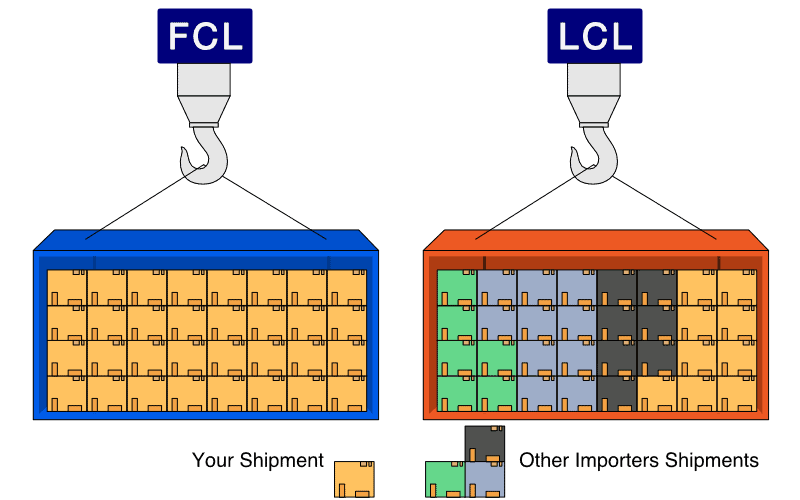
First, The Basics: What Do FCL and LCL Actually Mean?
FCL (Full Container Load) means you book an entire shipping container exclusively for your cargo. The container — typically a 20-foot (28–30 CBM capacity) or 40-foot (65–68 CBM capacity) unit — is loaded at the manufacturer’s facility or origin port, sealed, and shipped directly to the destination port without being opened or consolidated with anyone else’s cargo along the way. You pay a flat rate for the entire container, regardless of whether it’s completely full.
LCL (Less than Container Load) means your shipment shares container space with cargo from other importers. A freight consolidator collects partial shipments from multiple companies, loads them into one container at a Container Freight Station (CFS) near the origin port, ships the container to the destination, and then breaks it apart at a destination CFS before delivering each shipment to its respective buyer. You pay only for the volume your cargo occupies, measured in cubic metres (CBM).
The breakeven point — where it becomes cheaper to book an FCL rather than pay LCL rates — generally sits around 13–15 CBM, though this shifts depending on the trade lane and current freight market conditions.
The Numbers: What Does Each Option Actually Cost in 2026?
Understanding the cost structure of both options is essential before making a decision.
FCL Pricing (India to Major Destinations, 2026):
FCL is quoted as a flat rate per container, regardless of fill level. In 2026, typical FCL ocean freight rates from Indian ports (Mundra, Nhava Sheva) are:
- India to USA/East Coast: USD 2,000–3,500 for a 20-foot container; USD 3,000–5,000 for a 40-foot container
- India to Europe (Rotterdam, Hamburg): USD 1,200–2,500 for a 20-foot; USD 2,000–4,000 for a 40-foot
- India to UAE/Gulf: USD 500–900 for a 20-foot; USD 800–1,400 for a 40-foot
- India to Southeast Asia: USD 400–800 for a 20-foot
These rates exclude surcharges (BAF, EBS, documentation fees, origin/destination handling), which can add USD 300–800 per container depending on the lane.
LCL Pricing (2026):
LCL is charged per CBM (cubic metre), with current market rates in 2026 typically ranging from USD 80–150 per CBM for India-to-Europe lanes and USD 100–180 per CBM for India-to-USA routes, excluding origin CFS charges, destination handling, customs clearance, and drayage. LCL also carries a minimum charge — usually around 1 CBM or a minimum of USD 150–200 per shipment — meaning very small shipments don’t necessarily save as much as the per-CBM rate suggests.
The Breakeven in Practice:
For a practical illustration: a 10 CBM spice shipment from Mundra to Rotterdam via LCL at USD 120/CBM would cost approximately USD 1,200 in base ocean freight. That same shipment via FCL on a 20-foot container at USD 1,500 would be more expensive — LCL wins at that volume. But once your shipment exceeds 15–18 CBM, the per-unit economics flip decisively in favour of FCL, and by 20+ CBM, FCL almost always delivers a lower landed cost per kilogram of spice.
Why Spices Are Different: The Food Safety Dimension of LCL
For most cargo — electronics, clothing, industrial components — the FCL vs LCL decision is purely economic. For spices, there is a critical additional dimension: food safety and product integrity.
Spices are among the most chemically reactive commodities in international freight. They are hygroscopic, meaning they actively absorb moisture from their surroundings. They carry strong aroma profiles that readily transfer to and from adjacent cargo. They are sensitive to temperature fluctuations during the consolidation/deconsolidation process, which in LCL shipments can add 3–7 days of warehouse dwell time at the origin CFS before the container is full enough to sail.
In an LCL container, your pallets of cumin seeds or coriander powder share space with cargo from other shippers — and that cargo could be anything. Industrial lubricants, rubber products, cleaning chemicals, coffee, conventional wheat flour, animal feed — the range of co-loaded cargo in a typical LCL container is unpredictable. Spices are particularly vulnerable to odour absorption from nearby non-food cargo, which can render a technically intact shipment commercially unsellable.
The consolidation process itself introduces additional handling touchpoints—loading at the origin CFS and discharge at the destination CFS—each of which increases the likelihood of packaging damage, moisture exposure, and cross-contamination.
This is not a theoretical concern. Marine cargo insurance professionals consistently flag LCL as a higher-risk option for food and beverage suppliers precisely because contamination claims from shared container loading show up regularly in claims data. Food-grade consolidators who specialise in segregating food cargo from non-food cargo do exist. Still, they cost more and require explicit coordination — and even then, the risk is mitigated, not eliminated.
For ground spices — cumin powder, coriander powder, fennel powder, garam masala — this risk is even more acute. Ground spices have a significantly larger surface area per unit mass than whole seeds, making them more susceptible to moisture ingress and odour transfer. A shipment of whole cumin seeds in robust woven polypropylene bags can tolerate moderate handling variation; a shipment of cumin powder in kraft paper packaging is far less forgiving.
Transit Time: Where FCL and LCL Diverge
Transit time is the second major variable and is critical for buyers managing inventory cycles, seasonal demand peaks, or just-in-time procurement.
FCL transit times from Indian ports to major destinations are typically:
- India to USA (East Coast): 22–28 days
- India to Europe: 18–24 days
- India to UAE: 8–12 days
- India to Southeast Asia: 10–18 days
The container loads at the origin, sails, and unloads at the destination. Minimal intermediate handling means fewer opportunities for delay.
LCL transit times add a structural overhead on both ends. The consolidation process at the origin CFS typically takes 3–7 days — your cargo sits in a warehouse waiting for the consolidator to fill the container with other shippers’ cargo before it can sail. At the destination, deconsolidation at the destination CFS adds another 2–5 days. Total additional transit time for LCL versus FCL on the same trade lane is typically 5–12 days, and sometimes more when port congestion is elevated.
For spice importers planning against a quarterly procurement calendar or managing safety stock precisely, a 5–12 day variance per shipment is a meaningful operational constraint.
Customs Clearance: Another Area Where FCL Simplifies
Customs clearance efficiency is another factor that favours FCL for bulk spice importers, particularly those exporting to the US or EU, where food import documentation requirements are stringent.
With FCL, your container carries a single Bill of Lading, one set of phytosanitary certificates, one APEDA export certificate, and your customs declaration covers only your cargo. If there’s a question or delay at customs — which, for food imports, can sometimes involve physical inspection — it affects only your shipment.
With LCL, the container carries multiple shippers’ cargo and multiple documentation sets. If any co-loaded cargo triggers a customs hold or inspection at the destination port, your shipment can be delayed even though your paperwork is perfectly in order. In LCL, you are partially hostage to the compliance quality of whoever else is in your container.
For food importers in markets like the USA, where the FDA requires Prior Notice of food shipments and can issue Import Alerts that hold entire containers, this cross-contamination of customs risk is a genuine operational hazard.
So, When Does LCL Make Sense for Spice Importers?
With the above caveats clearly understood, LCL does serve a legitimate purpose for spice importers in specific situations:
1. Trial and New Supplier Qualification Orders When placing an initial order with a new spice supplier to validate quality, certifications, and processing standards before committing to full container volumes, LCL is the right call. It limits your capital exposure on a first shipment and allows you to assess the product without needing to absorb an entire 20-foot container of a product you haven’t yet verified.
2. Small Distributors and Specialty Importers Businesses importing 3–10 CBM of premium or niche spices — specialty blends, psyllium husk for a nutraceutical brand, or specific heritage varieties for a gourmet food importer — may genuinely not have the volume to justify FCL. For them, LCL is the appropriate vehicle, provided they use a food-grade consolidator and ensure robust, airtight packaging.
3. Market Testing in New Geographies When entering a new market and testing demand before establishing a regular procurement cadence, LCL offers flexibility without the commitment of an FCL order. The cost premium is worth the reduced inventory risk.
4. Diversified SKU Orders Below 15 CBM If your order covers multiple SKUs in small quantities — say, 200 kg cumin seeds, 150 kg coriander powder, 100 kg fennel seeds, and 50 kg ajwain seeds — and the total volume is under 12–15 CBM, LCL will almost certainly be cheaper on base freight. The key is ensuring that all products are sealed individually and packaged to withstand multiple handling cycles.
When FCL Is the Clear Winner for Bulk Spice Buyers
FCL becomes the logical choice in the following scenarios:
1. Regular, High-Volume Procurement If you’re buying above 15 CBM per shipment — which for most bulk spice categories represents roughly 8–12 metric tonnes of whole seeds or 6–9 metric tonnes of ground spice powder — FCL is consistently more economical on a per-kilogram landed cost basis, and dramatically safer from a product integrity standpoint.
2. Quality-Sensitive or Certified Organic Shipments Any shipment where organic certification, food safety traceability, or premium quality positioning is a commercial priority should go FCL. The risk of co-loading with non-food cargo compromising organic certification or creating an adulteration claim is simply not worth the marginal freight saving.
3. Buyers With Predictable Procurement Cycles If your business orders spices on a quarterly or bi-monthly cycle, you likely have the volumes to justify FCL. Regular FCL shippers also benefit from better freight rates — carriers offer more competitive pricing to consistent, high-volume customers — and from the option to negotiate annual contracts that insulate you from spot rate volatility.
4. Ground Spices and Powder Products Given the heightened moisture and cross-contamination sensitivity of ground spices, FCL should be the default shipping choice for cumin powder, coriander powder, fennel powder, and garam masala blends, regardless of whether the volume technically crosses the LCL/FCL cost breakeven.
Quick Reference: FCL vs LCL for Spice Importers
| Factor | FCL | LCL |
|---|---|---|
| Cost at 15+ CBM | Lower per kg | Higher per kg |
| Cost at under 13 CBM | Higher | Lower |
| Transit Time | Faster (no CFS dwell) | Slower by 5–12 days |
| Contamination Risk | Very Low | Moderate to High |
| Customs Risk | Isolated to your cargo | Shared with co-loaders |
| Flexibility | Lower (must commit to volume) | Higher |
| Best For | Established buyers, bulk, ground spices | Trial orders, small volumes, new markets |
| Organic/Premium Cargo | Strongly recommended | Risky — avoid if possible |
A Note on Packaging: Your First Line of Defence in Either Option
Whether you choose FCL or LCL, the quality of your packaging from the origin manufacturer determines much of your risk exposure during transit.
For whole spice seeds (cumin, coriander, fennel, sesame), multi-wall woven polypropylene bags with inner polyethylene liners provide strong moisture protection and structural integrity through multiple handling cycles. For ground spices and powders, heat-sealed laminate bags inside outer cartons, or FIBC bulk bags with food-grade inner liners, are the appropriate standard. The liner creates an airtight, moisture-proof seal that protects against the humidity variations and potential odour transfer that occur in any ocean freight environment, but are amplified in LCL.
At Sadbhaav Spices, all products are packed with export-grade materials in our in-house facility in Palghar — with customisable packaging specifications based on your destination market, import regulations, and whether you’re shipping FCL or LCL. We routinely advise our buyers on the most appropriate packaging configuration for their chosen shipping method before the order is confirmed.
What Sadbhaav Spices Offers: Full Flexibility, Transparent Guidance
We work with buyers across all volume tiers — from first-time importers testing a 3 CBM sample order to established distributors receiving quarterly FCL shipments.
Our product range covers the complete spectrum of bulk Indian spices and seeds:
- Whole Spices: Cumin Seeds, Coriander Seeds, Fennel Seeds, Fenugreek Seeds, Dill Seeds, Ajwain Seeds
- Ground Spices: Cumin Powder, Coriander Powder, Fennel Powder, Garam Masala
- Oil Seeds: Natural Sesame Seeds, Hulled Sesame Seeds, Black Sesame Seeds, Black & Yellow Mustard Seeds
- Herbs: Psyllium Husk
We offer both FCL and LCL-ready shipments, with APEDA certification, IEC compliance, phytosanitary documentation, and in-house quality checks on every batch. Our team will advise you transparently on the right shipping option for your volume, destination, and product mix — without upselling you into a container size that doesn’t fit your business stage.
The Bottom Line
The FCL vs LCL decision is not just a freight cost calculation. For spice importers, it is a product quality decision, a food safety decision, and a business risk decision rolled into one.
If your volume is below 13 CBM and you’re working with whole spice seeds in robust packaging, LCL is a reasonable and cost-effective choice — provided you use a reputable, food-grade consolidator. If your volume exceeds 15 CBM, if you’re shipping ground spices or powder products, if food safety certification is a commercial priority, or if you’re an established buyer with a predictable procurement cadence, FCL is almost always the right answer — both economically and operationally.
When in doubt, talk to your supplier. A good manufacturer knows their product’s sensitivity in transit and can guide you to the right decision before the booking is made, not after the shipment arrives with problems.
Ready to discuss your bulk spice shipment requirements? The Sadbhaav Spices team is happy to advise on volumes, packaging, and shipping options for your specific market.
📧 info@sadbhaavspices.com | 📞 +91 7397993793 🌐 www.sadbhaavspices.com
Sadbhaav Spices is a certified Indian spice manufacturer and exporter based in Palghar, Maharashtra. We supply bulk cumin seeds, coriander seeds, fennel seeds, sesame seeds, garam masala, psyllium husk, and more to importers, distributors, and food manufacturers worldwide.