
India controls 87% of the global cumin supply. That’s not just dominance — that’s a near-monopoly in a spice traded across 175+ countries.
If you’re a buyer sourcing cumin or an exporter looking to understand where the money is, this guide covers what actually matters: which varieties global buyers prefer, how grading works, where demand is growing fastest, and what prices look like in 2026.
Why Indian Cumin Rules the World
India’s cumin export industry generated $616.6 million in revenue during 2023, with 87% global market share and exports reaching 184,000 metric tonnes across 175+ countries. For 2025-26, India projects exporting 192,000 metric tonnes valued at approximately $700+ million, representing a 73% volume increase in the April-September 2024 period compared to the previous year.
Two states drive almost all of it. Gujarat and Rajasthan collectively produce 90% of India’s total cumin output, with Unjha (Gujarat) emerging as the premium cumin trading hub renowned for 3.5-4% volatile oil content and 99.5% purity grades.
The surge in 2024-25 wasn’t accidental. The exceptional growth in cumin exports has been driven by geopolitical supply disruptions in Middle Eastern competing origins (Syria, Iran, Turkey) and increased demand from neighbouring South Asian markets. When global buyers needed reliable alternatives, India was ready.
Indian Cumin Varieties: What You’re Actually Buying
Not all cumin from India is the same. Two distinct varieties dominate export markets, and understanding the difference directly impacts pricing and buyer suitability.
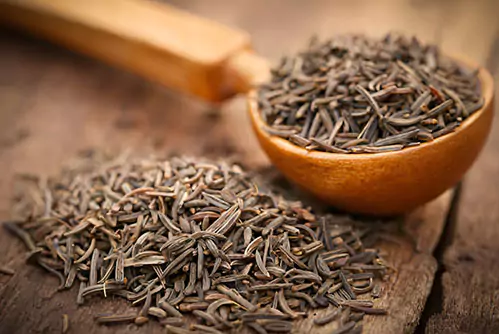
Green Cumin (Cuminum cyminum) — The Export Backbone
This is the standard cumin traded globally. Grown primarily in Gujarat and Rajasthan, it has the warm, earthy, slightly bitter profile that food manufacturers, restaurants, and spice brands worldwide rely on.
Key characteristics:
- Strong aroma with high volatile oil content (2.5-4%)
- Yellowish-green to greenish-brown colour
- Bold seed size with uniform shape
- Long shelf life if properly stored
Best for: Food manufacturing, seasoning blends, curry powders, meat marinades, retail packaging
Unjha Premium Advantage: Unjha cumin commands 8-12% premium over other origins due to superior volatile oil content (3.5-4%), making it the benchmark quality that serious international buyers request by name.
Black Cumin (Kala Jeera / Bunium persicum)
A completely different variety — smaller seed, sweeter aroma, and significantly higher price point. Not to be confused with Nigella seeds (kalonji), which are often mislabelled as black cumin.
Key characteristics:
- Smaller, darker seeds with sweeter, more delicate flavour
- Grown in Kashmir and Himalayan regions
- Scarcer supply and limited cultivation
- Premium pricing (2-3x green cumin rates)
Best for: Specialty food markets, premium spice brands, Middle Eastern cuisine applications, health supplement brands
Important for buyers: Always verify variety clearly in purchase contracts. Mislabelling between black cumin, nigella seeds, and caraway is common and causes costly disputes.
Export Grades: What the Market Recognizes
Cumin grading is based on purity, seed size, cleaning method, and foreign matter content. International buyers primarily evaluate based on four grades.
Machine Cleaned (MC) 98% / 99%
The standard commercial grade. Mechanically cleaned to remove dust, stones, and debris, but without optical sorting.
- Purity: 98-99%
- Best for: Bulk commodity buyers, food processors, grinding mills
- Pricing: Most competitive
- Typical buyers: Large food manufacturers, spice processors in Asia andthe Middle East
Sortex / Colour Sorted Grade
Processed through optical colour-sorting machines that remove discoloured, damaged, and split seeds. Visually cleaner and more uniform than MC grade.
- Purity: 99-99.5%
- Best for: Retail packaging, branded spice companies, premium food brands
- Pricing: 8-15% premium over MC grade
- Typical buyers: European spice brands, USA retailers, premium Middle East buyers
Singapore Grade (99% Purity)
Common export grades include “Singapore Grade” (typically 99% purity), which refers to the percentage of pure cumin seeds after cleaning, with minimal foreign matter. This grade is the standard benchmark for Asian trade, particularly Southeast Asian import markets.
Europe Grade (99.5% Purity)
Europe Grade (often 99.5% purity) refers to the percentage of pure cumin seeds after cleaning. Stricter pesticide MRL compliance, heavy metal testing, and often ETO sterilisation are required. As a reliable Cumin seeds exporter, meeting these standards ensures premium quality and allows this grade to command the highest prices.
- Purity: 99.5%
- Extra requirements: Pesticide residue testing, heavy metal limits, microbial standards
- Pricing: 15-25% premium over standard MC grade
- Typical buyers: EU food manufacturers, organic brands, pharmaceutical-grade buyers
Organic Certified Cumin
Growing rapidly. With demand from global health food brands, restaurants, and spice repackers, cumin export is becoming increasingly lucrative.
- Certification required: NPOP (India Organic), USDA Organic, EU Organic
- Price premium: 25-40% over conventional grades
- Target markets: USA natural food stores, European organic retailers, health supplement companies
Quality Parameters Buyers Check
Before issuing purchase orders, serious buyers verify these parameters. Have your Certificate of Analysis (COA) ready for all of them.
Moisture Content: Maximum 8-10%. Higher moisture causes mould during transit — a common reason for shipment rejections.
Volatile Oil Content: Minimum 2.5%, premium grades 3.5-4.% This is cumin’s aromatic value. Low volatile oil = weak flavour = unhappy buyers.
Foreign Matter: Maximum 1-2% for standard, <0.5% for premium. Stones, stems,and other seeds reduce quality and create liability issues.
Admixture: Maximum 1% Seeds from other plant species that contaminate the batch.
Purity: 98-99.5%, depending on grad.e The most commonly stated specification in purchase contracts.
HS Code: 09093100 (Cumin seeds, neither crushed nor ground) — use this for all export documentation.
Global Demand: Where Cumin Is Selling in 2026
More than 60% of all cumin exports go to China, the United States, Vietnam, the UAE, and Bangladesh. Here’s what each market wants.
China — The Volume Giant
China dominates Indian cumin imports, accounting for over 60% of total export volumes in certain periods.
China buys in enormous quantities for its food processing industry, spice blending operations, and traditional medicine sector. Price sensitivity is high — they buy MC 98/99% grade primarily on competitive FOB pricing.
What they want: MC grade, competitive pricing, large volume consistency. Typical order size: 500-5,000 MT per shipment
Bangladesh — The Most Frequent Buyer
Bangladesh has 1,175 annual shipments, making it the most consistent buyer. Proximity to India, cultural similarities, and a massive cooking tradition built around cumin make Bangladesh the most reliable repeat-order market.
What they want: Standard quality, fast delivery, flexible order size.s Typical order size: 20-200 MT, frequent repeat orders
USA — The Premium Opportunity
The United States has 808 shipments of cumin annually. American buyers are willing to pay for quality — Sortex grade, organic certifications, and clean-label compliance matter here.
What they want: Sortex or Europe grade, pesticide-free, preferably organic. Certifications expected: USDA Organic (for organic segment), FDA compliance, HACCP. Growth driver: Rising Hispanic and South Asian populations, health-conscious consumers
UAE & Middle East — The Re-Export Hub
UAE imports premium Indian cumin and redistributes it across the broader Middle East and Africa. Buyers here are sophisticated and quality-focused.
What they want: High purity Sortex grade, Halal certification, attractive retail packaging. Key entry point: Gulfood exhibition (Dubai, February annually) is the most important trade show for this region
Vietnam — The Fast-Growing Market
Vietnam has emerged as a significant new buyer, driven by its expanding food processing industry. Export growth of 70.7% to 1.65 lakh MT between April and December 2024 reflected strong international demand — Vietnam contributed meaningfully to this growth.
What they want: MC grade, competitive pricing, consistent supply Opportunity: Long-term supply agreements with processors offer stable volumes
2026 Export Pricing Guide (FOB Mundra/JNPT)
| Grade | Specification | FOB Price (USD/kg) |
|---|---|---|
| Machine Cleaned | 98% Purity | $2.80 – $3.20 |
| Machine Cleaned | 99% Purity | $3.00 – $3.40 |
| Sortex Grade | 99-99.5% Purity | $3.40 – $3.80 |
| Europe Grade | 99.5% + Pesticide Tested | $3.80 – $4.50 |
| Organic Certified | 99%+ USDA/EU Organic | $4.50 – $6.00 |
| Black Cumin | Premium | $8.00 – $14.00 |
Unjha cumin commands 8-12% premium over other origins due to superior volatile oil content (3.5-4%). If your buyer specifies origin, Unjha-sourced cumin justifies a price premium.
Price factors to watch in 2026:
- Monsoon performance in Gujarat and Rajasthan (most critical variable)
- Global supply from competing origins (Syria, Iran recovering capacity)
- Currency fluctuation (USD/INR impacts competitiveness)
- Domestic retail prices peaked in late 2024 but have since stabilized, with Unjha, Gujarat, remaining the cheapest global market.
Essential Export Registrations
You need three core registrations before your first shipment:
IEC (Importer Exporter Code) Issued by DGFT. Required for any legal export from India. Apply online at dgft.gov.in. Processing time: 5-7 days.
APEDA Registration Cumin is a scheduled spice under APEDA. Registration is mandatory and gives you access to export data, trade fair support, and buyer databases. Apply at apeda.gov.in.
FSSAI License Food safety compliance for processing and packing. State or Central license depending on your scale of operation.
With these three in place, you can export legally and access government incentive schemes, including RoDTEP benefits.
Packaging Standards for Export
Getting packaging right protects quality and meets buyer expectations across different markets.
Standard Export Packaging:
- 25kg or 50kg PP (Polypropylene) woven bags with inner liner
- BOPP bags for premium presentation
- Jute bags for organic/eco-conscious buyers
Retail Export Packaging:
- 100g, 200g, 500g, 1kg pouches for branded/retail channel
- Private label options with custom design
- Vacuum-sealed for extended shelf life
Labelling Requirements:
- Product name and variety
- Net weight
- Country of origin: Product of India
- Batch number and packing date
- FSSAI licence number
- Cumin HS Code reference
- Storage instructions
Common Buyer Objections (And How to Handle Them)
“Your price is higher than the competitors.” Justify with volatile oil content data, COA showing 99.5% purity, and Unjha origin certification. Quality cumin from India is worth the premium — and experienced buyers know it.
“Can you guarantee pesticide-free compliance?” Offer multi-residue pesticide testing from NABL-accredited labs as standard practice. For EU buyers, ETO or steam sterilisation adds an extra safety layer.
“We need consistent supply across seasons.” Lock in procurement from Unjha APMC during harvest season (March-May). Cold storage investment allows year-round supply consistency without price exposure.
“We want organic but your prices are too high.” Break down the cost of organic certification and the premium it commands in their market. Most buyers understand the economics once explained clearly.
The Bottom Line
Cumin export from India is not just a commodity business — it’s a relationship business built on quality consistency, reliable documentation, and understanding what different markets actually need.
China wants volume. USA wants quality. Bangladesh wants reliability. UAE wants presentation. Europe wants compliance.
The exporters who succeed in 2026 are the ones who stop trying to serve everyone and instead become the trusted supplier for 2-3 key markets where their sourcing strength and certifications create a genuine advantage.
India’s 87% global market share isn’t going anywhere. The question is which exporters capture the value that comes with it.
About Sadbhaav Spices
At Sadbhaav Spices, we source premium cumin directly from Unjha — Asia’s largest cumin trading hub — ensuring maximum volatile oil content, superior aroma, and export-grade purity in every shipment. From MC 99% to organic-certified Sortex grade, we supply verified quality with full documentation support for buyers across the USA, Middle East, Europe, and Asia.
Looking for reliable cumin supply from India? Talk to our export team today.