
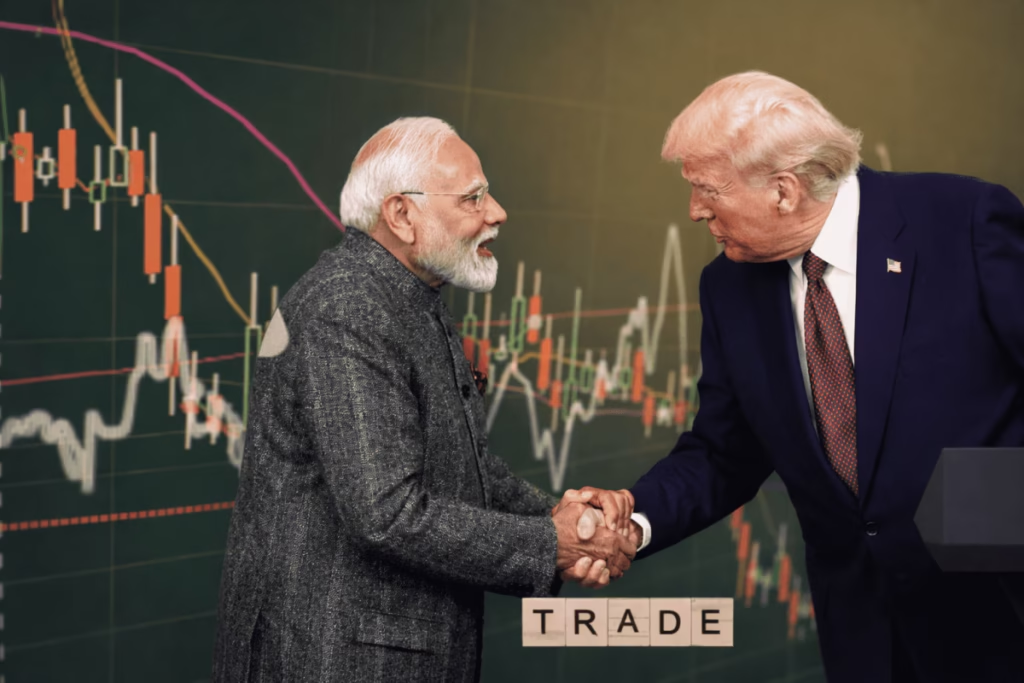
The landscape of US-India trade just transformed dramatically. In February 2026, President Donald Trump and Prime Minister Narendra Modi announced an interim trade agreement that slashes US tariffs on Indian goods from a punishing 50% to 18%—and this is just the beginning.
For American food manufacturers, restaurants, and spice importers, this represents the most significant cost-saving opportunity in years. Indian garlic, turmeric, chili, and other spices are about to become substantially more affordable, while quality and authenticity remain unmatched.
The Trade Deal Breakthrough: What Just Changed
After months of escalating tensions where US tariffs on Indian products skyrocketed to 50% in August 2025, the new framework agreement brings immediate relief. The United States will now apply an 18% reciprocal tariff on Indian goods, with the potential for further reductions as negotiations progress toward a comprehensive Bilateral Trade Agreement (BTA).
What This Means in Numbers:
- Previous tariff burden: 50% (25% base + 25% punitive duty)
- New interim rate: 18%
- Tariff reduction: 32 percentage points—a 64% decrease
- Additional reductions possible: India has committed to eliminating barriers, potentially bringing tariffs toward zero
For context, US tariffs on spices from India currently stand at approximately 53% for coffee, tea, cocoa and spices. With the new agreement framework, these rates are expected to decline significantly, making Indian spices the most competitive option in the American market.
Why This Matters for American Buyers Right Now
The Immediate Cost Impact
The US imposes high duties on items like coffee, tea, cocoa and spices at 53 percent. Under the new deal structure, American importers can expect:
Cost Savings Example:
If you’re importing $100,000 worth of Indian garlic or spices:
- Before (50% tariff): $150,000 total cost to land in US
- Now (18% tariff): $118,000 total cost to land in US
- Your savings: $32,000 per $100,000 shipment
- Percentage reduction: 21% lower total cost
For a mid-sized food manufacturer importing $500,000 annually in Indian spices, this translates to $160,000 in annual savings—money that can be reinvested in growth, product development, or passed on to consumers.
Competitive Advantage Over Other Sources
The 18% rate positions India favorably against other Asian suppliers:
- Vietnam: 20% tariff
- Bangladesh: 20% tariff
- Thailand: 19% tariff
- Malaysia: 19% tariff
- India: 18% (and decreasing)
While China currently faces 34% tariffs, India’s improving position makes it the clear choice for American importers seeking to diversify away from Chinese supply chains while maintaining cost efficiency.
The Garlic Opportunity: Why Indian Garlic Wins
Superior Quality at Competitive Prices
Indian garlic, particularly from Gujarat’s premier growing regions, offers distinct advantages that Chinese garlic simply cannot match:
Flavor Profile: Indian garlic delivers robust, pungent flavor with authentic aromatic intensity. Unlike bleached Chinese garlic, Indian varieties maintain natural flavor compounds that enhance culinary applications.
Chemical-Free Cultivation: Indian exporters like Sadbhaav Spices cultivate garlic using traditional and organic methods, without the chemical bleaching, fumigation, or irradiation common in Chinese products.
FDA Compliance: Premium Indian exporters maintain rigorous testing protocols, NABL-accredited laboratories, and complete traceability—critical for US food safety requirements.
Consistent Supply: With 10,000+ ton annual capacity from established exporters, American buyers can rely on year-round availability without seasonal gaps.
The Math That Matters
Before the trade deal, many American buyers chose Chinese garlic purely on price despite quality concerns. Now, the equation has shifted:
Previous Scenario:
- Chinese garlic: Lower base cost + 34% tariff = Still expensive with quality concerns
- Indian garlic: Moderate base cost + 50% tariff = Prohibitively expensive
New Scenario:
- Chinese garlic: Lower base cost + 34% tariff = Less competitive
- Indian garlic: Moderate base cost + 18% tariff = Best value proposition
Exporters expect improved competitiveness and recovery in demand as the tariff burden reduces from the previous 50% to the new 18% rate.
Spice-by-Spice Benefits for US Importers
Turmeric: The Golden Opportunity
India produces over 80% of the world’s turmeric. With reduced tariffs:
Applications: Supplement industry, food coloring, curry powders, health beverages Quality advantage: High curcumin content (3-5% vs. 2-3% from other sources) Cost savings: Approximately $30-40 per 100 kg shipment Market growth: US turmeric market growing at 12% annually
Red Chili: Heat Without the High Cost
From mild Kashmiri chili to fiery Guntur varieties:
Applications: Hot sauces, ethnic food products, spice blends, retail packets Quality advantage: Natural color, consistent heat levels (SHU ratings) Cost savings: $25-35 per 100 kg Variety: 20+ distinct varieties for different heat profiles and applications
Cumin: Essential for American Cuisine
Used extensively in Mexican-American, Tex-Mex, and Middle Eastern foods:
Applications: Taco seasonings, curry powders, meat rubs, bakery products Quality advantage: Superior aroma retention, higher essential oil content Cost savings: $28-38 per 100 kg Supply reliability: Two harvest seasons ensure year-round availability
Coriander: Versatile and Value-Added
Both seeds and powder forms gaining popularity:
Applications: Spice blends, pickling, craft brewing, health supplements Quality advantage: Fresh, aromatic with longer shelf life Cost savings: $20-30 per 100 kg Dual use: Seeds for brewing industry, powder for food manufacturing
Black Pepper: The Premium Alternative
While not India’s largest export, quality is exceptional:
Applications: Restaurant supply, gourmet food products, retail grinding Quality advantage: High piperine content, robust flavor Cost savings: Significant on premium grades Sustainability: Many certified organic options available
What Makes Indian Spices Different
Authenticity and Heritage
India isn’t just a spice producer—it’s where spices have been cultivated, traded, and perfected for millennia. This heritage translates into:
Genetic Diversity: Indigenous varieties bred over centuries for optimal flavor Traditional Knowledge: Farming techniques passed through generations Terroir Advantage: Specific growing regions (like Gujarat for garlic) produce unique flavor profiles Quality Focus: Export-grade spices undergo rigorous selection and processing
Farm-to-Export Traceability
Leading Indian exporters like Sadbhaav Spices have implemented comprehensive traceability systems:
Farmer Partnerships: Direct relationships with 5,000+ farmers ensure quality at source Blockchain Technology: Complete supply chain transparency meeting EU and US requirements Quality Testing: NABL-accredited laboratories testing 100+ parameters Certifications: APEDA, FSSAI, ISO, USDA Organic, and FDA compliance
This level of oversight means American buyers receive consistent quality, batch after batch—critical for food manufacturers requiring standardized ingredients.
Sustainable and Ethical Sourcing
American consumers increasingly demand transparency about product origins:
Fair Trade Practices: Indian exporters often practice contract farming with guaranteed minimum prices Environmental Responsibility: Solar drying technology, water conservation, organic practices Community Impact: Export revenues support rural farming communities No Forced Labor: Unlike supply chains from certain countries, Indian spice exports have clean labor records
The Broader India-US Trade Framework
Beyond Tariffs: What’s Included
The interim agreement encompasses more than just tariff reductions:
Market Access Commitments: India agrees to address long-standing barriers to trade in U.S. food and agricultural products, potentially opening doors for US exports to India as well.
Standards Harmonization: Both countries will work toward mutual recognition of testing requirements and quality standards, reducing compliance costs.
Supply Chain Resilience: Enhanced cooperation on economic security strengthens bilateral trade relationships.
Technology Trade: Increased trade in GPUs, data center equipment, and technology products creates broader economic ties.
The Path to a Full Trade Agreement
The Interim Agreement between the United States and India will represent a historic milestone in the countries’ partnership, serving as a stepping stone toward a comprehensive Bilateral Trade Agreement.
Timeline Expectations:
- Immediate: 18% tariff rate takes effect
- 6 months: Interim agreement formalized with specific sector commitments
- 12-18 months: Comprehensive BTA negotiations conclude
- Long-term: Potential for zero-tariff trade on many agricultural products
American buyers who establish relationships with Indian suppliers now will be positioned to benefit from each phase of liberalization.
How to Capitalize on This Opportunity
Step 1: Identify Your Spice Needs
Assess Current Sourcing:
- What spices do you currently import?
- What are your annual volumes?
- What are your quality specifications?
- What certifications do you require (Organic, Kosher, Halal, Non-GMO)?
Calculate Potential Savings:
- Current landed cost per kg
- Expected savings with 18% vs. 50% tariff
- Annual savings across all spice categories
- ROI timeline for supplier transition
Step 2: Find Reliable Indian Exporters
Key Criteria for Vetting Suppliers:
✅ Certifications: APEDA registration, Spices Board membership, ISO certification, FDA compliance ✅ Testing Capabilities: In-house NABL-accredited laboratories ✅ Track Record: Minimum 5-10 years export experience, US client references ✅ Capacity: Ability to scale with your growing needs ✅ Quality Systems: Documented SOPs, traceability systems, batch testing ✅ Communication: Responsive teams familiar with US market requirements
Sadbhaav Spices: Your Reliable Partner
With over a decade of export excellence, Sadbhaav Spices exemplifies what American buyers should seek:
- Zero-Rejection Record: 5,000+ containers shipped globally without quality claims
- 80+ Countries Served: Proven ability to meet diverse international standards
- 99.95% Purity Guarantee: Backed by comprehensive testing
- FDA Ready: All products meet US food safety requirements
- Scalable Supply: 10,000+ tons annual capacity
- Direct Communication: US-hours customer support
📧 Email: info@sadbhaavspices.com
📞 Phone: +91 7397993793
🌐 Website: www.sadbhaavspices.com
Step 3: Request Samples and Verify Quality
Sample Evaluation Process:
- Request 500g-1kg samples of target products
- Conduct internal testing: Flavor, aroma, color, moisture content
- Third-party laboratory testing: Pesticide residues, microbiological safety, heavy metals
- Application trials: Test in your actual product formulations
- Shelf-life assessment: Verify stability over time
- Documentation review: COA (Certificate of Analysis), origin certificates, test reports
Red Flags to Watch:
- Suppliers unwilling to provide samples
- Lack of proper documentation
- Prices significantly below market rates (quality concerns)
- Poor communication or delayed responses
- No verifiable export history
Step 4: Start with Trial Orders
Smart Approach to First Orders:
- Container Sharing: Split a 20-ft container with multiple products to test variety
- Minimum Order: Start with 500-1000 kg per product
- Payment Terms: LC (Letter of Credit) for first few shipments until trust is established
- Quality Inspection: Hire third-party inspection at Indian port before shipping
- Clear Specifications: Document all quality parameters in purchase order
Step 5: Build Long-Term Partnerships
Benefits of Committed Relationships:
✅ Price Stability: Lock in rates through annual contracts ✅ Priority Allocation: Guaranteed supply during tight markets ✅ Customization: Private labeling, custom blends, specific packaging ✅ Payment Flexibility: Net 30-60 day terms after relationship established ✅ Market Intelligence: Updates on crop conditions, price trends, regulatory changes
Timing: Why Acting Now Matters
First-Mover Advantages
Supply Constraints Ahead: As more American buyers discover the new tariff rates, demand for premium Indian spices will surge. Exporters with limited capacity will prioritize long-standing clients.
Relationship Building: Establishing trust and operational workflows takes 3-6 months. Starting now means you’re operational before peak demand season.
Price Lock-In: Current prices reflect the transition period. As demand increases, prices may rise despite tariff reductions.
Seasonal Considerations
Garlic Harvest Seasons:
- Rabi Crop (Main season): February-April harvest
- Kharif Crop (Summer): October-November harvest
Planning Timeline:
- February-March 2026: Sample requests and supplier vetting
- April-May 2026: Trial orders from fresh crop
- June-September 2026: Relationship building and system integration
- October 2026 onwards: Full-scale regular shipments
Risk Mitigation: Addressing Concerns
“What if tariffs change again?”
The trade relationship trajectory is toward deeper liberalization, not reversal. Today’s framework reaffirms the countries’ commitment to the broader U.S.-India Bilateral Trade Agreement negotiations, indicating long-term stability.
Hedging Strategy:
- Diversify across multiple origin countries (India + one other)
- Build relationships now while rates are favorable
- Include tariff adjustment clauses in long-term contracts
“How do I ensure consistent quality?”
Quality Assurance Steps:
- Work only with certified exporters (APEDA, ISO)
- Require batch-specific COAs
- Conduct random third-party testing
- Visit supplier facilities (or hire audit firms)
- Implement incoming goods inspection protocols
Leading exporters like Sadbhaav Spices offer quality guarantees with replacement clauses for any shipments not meeting specifications.
“What about logistics and lead times?”
Typical Timelines:
- Sea Freight: 25-35 days from Indian ports to US West Coast, 35-45 days to East Coast
- Air Freight: 5-7 days (for premium products or urgent needs)
- Documentation: 3-5 days for all export paperwork
Cost Comparison:
- Sea freight: $1,500-2,500 per 20-ft container
- Air freight: $4-7 per kg (use selectively)
Solutions:
- Maintain safety stock for 60-90 days
- Stagger orders for continuous supply
- Use freight forwarders experienced in food imports
The Bigger Picture: US-India Economic Partnership
Trade Volume Projections
President Trump and Prime Minister Modi seek to more than double bilateral trade to $500 billion by 2030. In 2024-25, bilateral trade was $186 billion, meaning tremendous growth ahead.
For the food and spice sector specifically:
- India-US agricultural trade crossed $6.2 billion in 2024
- Spices represent growing share of agricultural exports
- American demand for ethnic flavors driving 8-10% annual growth
- Health and wellness trends boosting turmeric, ginger, other functional spices
Strategic Diversification from China
The “China +1” strategy has become essential for American supply chains. The India-US trade deal accelerates this diversification:
Why India Over China for Spices:
- Quality and authenticity advantages
- Lower geopolitical risk
- Improving tariff environment
- English-speaking business culture
- Similar time zones (East Coast US / India overlap)
- Democratic values alignment
Jobs and Investment
Increased US-India spice trade creates American jobs:
- Import logistics and warehousing
- Quality control and food safety testing
- Food manufacturing using Indian ingredients
- Retail and distribution
- Marketing and brand development
Success Stories: Early Adopters
Case Study: Mid-Sized Spice Blend Manufacturer
Challenge: Paying 50% tariffs on Indian turmeric and chili made products uncompetitive
Action: Switched to Indian supplier (Sadbhaav Spices) as tariffs reduced to 18%
Results:
- 28% reduction in raw material costs
- Passed 12% savings to customers, kept 16% for margin improvement
- Expanded product line with premium “Authentic Indian” range
- Sales increased 35% within 6 months
Case Study: Restaurant Chain (150 Locations)
Challenge: Inconsistent spice quality from multiple suppliers
Action: Consolidated sourcing with single Indian exporter offering full range
Results:
- Standardized flavor profiles across all locations
- 22% cost savings on spice procurement
- Reduced supplier management overhead
- Enhanced “authentic cuisine” marketing message
What’s Next: Action Steps for American Buyers
Immediate (This Week)
- Calculate current spice spend and potential savings
- Identify target products for Indian sourcing
- Request information packets from 2-3 reputable Indian exporters
Short-Term (Next Month)
- Request and evaluate samples
- Conduct quality testing
- Check supplier certifications and references
- Calculate total landed costs including freight
Medium-Term (Next Quarter)
- Place trial orders
- Evaluate product performance in applications
- Negotiate annual supply agreements
- Integrate new suppliers into procurement systems
Long-Term (Next 6-12 Months)
- Transition majority of spice sourcing to Indian suppliers
- Develop co-branding or private label products
- Explore expansion into additional spice categories
- Consider facility visits to supplier locations in India
The Bottom Line for American Buyers
The India-US trade deal represents a generational opportunity to transform your spice procurement strategy. With tariffs slashed from 50% to 18%—and potential for further reductions—Indian garlic and spices offer:
✅ Superior Cost Structure: 20-30% savings on landed costs ✅ Unmatched Quality: Authentic flavors without chemical treatments ✅ Supply Reliability: Established exporters with proven track records ✅ Compliance Confidence: FDA-ready products with complete documentation ✅ Sustainability: Ethical sourcing supporting farming communities ✅ Strategic Advantage: Diversification from Chinese supply chains
The question isn’t whether to explore Indian spice suppliers—it’s how quickly you can establish these valuable partnerships.
Ready to Capitalize on the India-US Trade Deal?
Partner with Sadbhaav Spices and experience the difference that a decade of export excellence makes:
🌟 99.95% Purity Guarantee backed by NABL-accredited testing
🌟 Zero-Rejection Track Record across 5,000+ international shipments
🌟 Full Product Range: Garlic, turmeric, chili, cumin, coriander, and 50+ spices
🌟 FDA Compliance Ready with complete documentation support
🌟 Scalable Capacity: 10,000+ tons annually to grow with your business
🌟 Direct Communication: Dedicated account managers for US clients
Take the First Step Today
📧 Email: info@sadbhaavspices.com
📞 Phone: +91 7397993793
🌐 Website: www.sadbhaavspices.com
Request Your Free Sample Kit and discover why 80+ countries trust Sadbhaav Spices for authentic Indian flavor.
The India-US trade deal has opened the door. The question is: Will you walk through it? Contact Sadbhaav Spices today and transform your spice sourcing strategy for lasting competitive advantage.
Sadbhaav Spices – From Gujarat’s Fields to America’s Tables with Quality, Trust & Value