
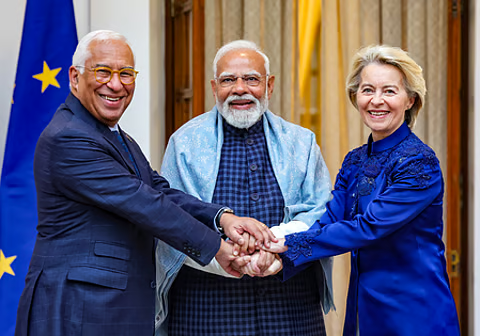
On January 27, 2026, India and the European Union signed what leaders are calling the “mother of all deals”—a comprehensive Free Trade Agreement that creates the world’s largest free trade zone of 2 billion people. For India’s spice exporters, this historic agreement opens unprecedented access to Europe’s 448 million consumers and a €16 trillion economy, the second-largest market globally.
The India-EU FTA delivers immediate and substantial benefits specifically designed to boost spice exports, from tariff elimination to simplified customs procedures. Understanding these advantages is crucial for exporters looking to capitalize on what could be India’s most transformative trade opportunity in decades.
Immediate Zero-Duty Market Access For Spices
The most significant benefit for spice exporters is the immediate elimination of EU import duties on Indian spices upon the agreement’s entry into force in 2026.
Comprehensive Tariff Elimination
Under the FTA, 70.4% of tariff lines covering 90.7% of India’s exports will have immediate duty elimination for important labour-intensive sectors such as textiles, leather and footwear, tea, coffee, spices, sports goods, toys, gems and jewellery and certain marine products. This means spice exporters gain instantaneous price competitiveness in European markets.
Prior to the FTA, Indian spices faced EU tariffs ranging from 3% to 9%, depending on the product category. These duties added significant costs that reduced profit margins or forced Indian exporters to charge higher prices than competitors. The immediate removal of these barriers levels the playing field completely.
Product-Specific Tariff Benefits
Different spice categories benefit from varying levels of tariff reduction:
Cumin Seeds: Previously subject to 3.2% EU import duty, now entering duty-free. For Gujarat’s cumin exporters who dominate 70% of India’s production, this translates to immediate cost savings of approximately €320 per 10-ton container—a substantial competitive advantage.
Turmeric: Faced 6% tariffs that are now eliminated. Given turmeric’s surging demand in European wellness markets (growing at 8.5% CAGR), zero-duty access positions Indian suppliers as the most cost-competitive source for this anti-inflammatory superfood.
Black Pepper: Kerala’s premium Malabar pepper, which commands 96% of India’s production, previously competed against Vietnamese suppliers while bearing 5-6% EU duties. Complete tariff elimination allows Indian pepper to compete purely on quality and service rather than being disadvantaged by tax burdens.
Dried Chilies: Byadgi and other premium Indian chili varieties faced up to 7.7% import duties. Zero tariffs mean these color-rich, GI-tagged chilies can capture market share from Spanish and Turkish competitors who lack India’s quality advantages.
Coriander Seeds: The 2.4% tariff elimination benefits Rajasthan’s coriander exporters, allowing them to price more competitively for European food manufacturers sourcing in bulk quantities.
Cardamom, Cloves, Cinnamon, Fennel: All aromatic spices gain immediate duty-free entry, enhancing India’s position as Europe’s preferred supplier for these premium products.
Preferential Access Exceeding Other Trade Partners
India will grant the EU tariff reductions that none of its other trading partners have received, dramatically improving market access for EU exports. Importantly, this reciprocal relationship means the EU has also granted India unprecedented preferential access that exceeds what competing spice-origin countries receive.
Competitive Advantage Over Vietnam and Indonesia
Vietnam and Indonesia, India’s primary competitors in European spice markets, do not enjoy the same comprehensive zero-duty access under their existing trade arrangements with the EU. This creates a structural competitive advantage for Indian exporters:
Price Competitiveness: With duties eliminated, Indian spices can be priced 3-9% lower than competing origins while maintaining identical profit margins, or exporters can maintain current pricing and capture higher margins.
Market Share Gains: European buyers, particularly large food manufacturers and retail chains operating on thin margins, will find Indian spices significantly more attractive purely from a cost perspective. Industry analysts project India could capture an additional 15-20% market share in EU spice imports over the next five years.
Long-Term Supply Relationships: The FTA provides predictable, stable tariff treatment for decades, encouraging European buyers to establish long-term sourcing relationships with Indian suppliers rather than constantly switching between origins based on temporary price advantages.
Enhanced Competitiveness For Processed Spice Products
Beyond raw spices, the FTA creates substantial opportunities for value-added processed spice products that command higher margins.
Immediate Access For Spice Blends and Powders
Phased zero-duty access over 3 to 5 years will cover 20.3% of tariff lines, representing 2.9% of exports, including certain marine products, processed foods, and arms and ammunition. Many processed spice products fall within categories receiving immediate zero-duty access, while some premium processed items phase to zero over 3-5 years.
Curry Powders and Masala Blends: Ready-to-use garam masala, curry powder blends, tandoori masala, and other traditional Indian spice mixes now compete directly with European-produced blends without tariff disadvantages. This enables Indian manufacturers to leverage authentic recipe heritage and lower production costs simultaneously.
Ground Spice Powders: Turmeric powder, chili powder, cumin powder, and coriander powder gain enhanced market access. European consumers increasingly seek convenience, and pre-ground spices from India can now be priced competitively against locally processed alternatives.
Organic Spice Products: The EU’s booming organic market (€55.7 billion and growing) pays substantial premiums—often 30-50% above conventional products. With tariffs eliminated, Indian organic-certified spices become even more attractive to health-conscious European consumers and specialty retailers.
Functional Food Ingredients: Turmeric extract (curcumin), black pepper extract (piperine), ginger extract, and other spice-derived ingredients for nutraceuticals and functional foods benefit from tariff elimination. Europe’s €340 million curcumin supplement market becomes directly accessible to Indian processors.
Simplified Customs Procedures and Reduced Documentation Burden
The documentation on origin follows the latest standards based on self-certification by businesses to make it as easy as possible to benefit of the tariff reductions, especially for small and medium sized companies. This administrative simplification represents a significant operational benefit for spice exporters.
Self-Certification System
Previously, exporters needed to obtain formal Certificates of Origin from chambers of commerce or government authorities—a process involving fees, time delays, and bureaucratic procedures. The FTA introduces a streamlined self-certification system where:
Exporters Certify Directly: Registered exporters can self-certify the origin of their products through a simple “statement on origin” uploaded to a digital portal. This eliminates waiting periods and certification fees that previously added 2-5 days and ₹500-2,000 per shipment.
Digital Portal Access: The electronic system allows immediate verification by EU customs authorities, accelerating clearance times at European ports. Faster clearance means reduced demurrage charges, lower inventory carrying costs, and improved cash flow for exporters.
MSME-Friendly Process: Small and medium-sized spice exporters, who previously struggled with the administrative complexity and costs of formal certification, now access the same preferential treatment as large corporations. This democratizes export benefits across the industry.
Reduced Border Inspection Requirements
The FTA strengthens regulatory cooperation between Indian and EU authorities, leading to mutual recognition of inspection procedures and quality certifications. This means:
Fewer Physical Inspections: Shipments from certified facilities with established track records face reduced physical inspection rates at EU borders, speeding clearance and reducing spoilage risk for sensitive spice products.
Recognized Certifications: Indian certifications like APEDA registration, Spices Board quality marks, and FSSAI licenses gain enhanced recognition in EU processes, reducing duplicate testing requirements.
Predictable Clearance Times: Standardized procedures and digital documentation create predictable clearance timelines, allowing exporters to provide more reliable delivery commitments to European buyers.
Market Access Exceeding Previous GSP Benefits
In 2023, the EU withdrew its Generalized Scheme of Preferences (GSP) benefits for India, reclassifying the country as a developed economy ineligible for preferential treatment. This exposed Indian exporters to higher standard tariffs and created competitive disadvantages. The FTA reverses and exceeds these previous GSP benefits.
Permanent vs. Temporary Preferences
In 2023, the EU withdrew its generalised scheme of preferences (GSP) benefits for India, exposing its exporters to higher tariffs. The new deal, analysts noted, could give India an edge in several sectors. Unlike GSP benefits, which are unilaterally granted by the EU and can be withdrawn at any time based on development criteria, FTA tariff preferences are:
Contractually Guaranteed: Bound by international treaty law, the tariff benefits cannot be unilaterally withdrawn by either party. This provides permanent, stable market access rather than temporary preferential treatment.
Broader Coverage: The FTA eliminates duties on more products and at deeper levels than GSP ever provided. For spices specifically, complete elimination surpasses the partial preferences available under GSP.
Reciprocal Commitments: Because both parties make binding commitments, the relationship is more stable and resistant to political pressures that affected previous unilateral preference schemes.
For spice exporters, this permanent security enables long-term business planning, investment in processing facilities, and confidence in cultivating European customer relationships that will endure for decades.
Significant Market Expansion Potential
The European Union represents an enormous market opportunity for Indian spice exporters, with the FTA creating conditions for substantial export growth.
€120 Billion Two-Way Trade Foundation
Bilateral trade in goods between the two partners equalled €120 billion in 2024. EU goods imports from India stood at €71 billion in 2024, while EU goods exports reached nearly €49 billion during the same year. While spices currently represent a small portion of this total trade, the elimination of tariff barriers creates potential for exponential spice export growth.
Projected Export Growth
Industry analysts project the FTA could increase Indian spice exports to the EU by 40-60% over the next decade. Several factors drive this optimistic outlook:
Growing European Demand: Europe’s food industry increasingly incorporates global flavors, with ethnic cuisine, fusion foods, and international ingredients becoming mainstream. Indian spices are essential to these trends.
Health and Wellness Boom: Post-COVID, European consumers dramatically increased consumption of immunity-boosting and anti-inflammatory ingredients. Turmeric, ginger, black pepper, and other medicinal spices saw 25% export growth post-pandemic—a trend the FTA amplifies through zero-duty access.
Organic and Premium Positioning: European consumers pay substantial premiums for organic, GI-tagged, and ethically sourced products. Indian exporters offering Kerala cardamom, Byadgi chili, or Malabar pepper with proper certifications can capture these high-value market segments more easily without tariff burdens.
Foodservice Expansion: European restaurants, hotels, and catering operations increasingly feature Indian, Middle Eastern, and Southeast Asian cuisines requiring authentic spices. Duty-free imports make sourcing directly from India more attractive than purchasing from European distributors.
Rural Income Enhancement and Farmer Benefits
The FTA creates direct benefits for India’s spice-growing farming communities through improved market access and pricing power.
Strengthened Farmer Incomes
Preferential Market Access for agricultural products like tea, coffee, spices, grapes, gherkins and cucumbers, dried onion, fresh vegetables and fruits as well as for processed food products will make them more competitive in the EU. This market access will strengthen farmers’ realised incomes, reinforce rural livelihoods, and elevate the global competitiveness of Indian agricultural products.
Direct Price Transmission: When exporters save 3-9% on EU tariffs, competitive market dynamics typically transmit 40-60% of these savings back to farmers through higher procurement prices. For a cumin farmer selling 500 kg per season, tariff elimination could mean ₹3,000-5,000 additional annual income—significant for smallholder agriculture.
Expanded Cultivation: Higher and more stable export prices incentivize farmers to expand spice cultivation. Areas suitable for cumin, coriander, fennel, and other spices but currently devoted to lower-value crops may shift to spice production, increasing farmer incomes and strengthening India’s export supply base.
Women’s Economic Participation: Spice processing, sorting, cleaning, and packaging employ hundreds of thousands of rural women. Export growth driven by the FTA creates additional employment opportunities in these labor-intensive activities, enhancing women’s economic participation and family incomes.
Geographic Diversification Benefits
Different Indian states specialize in different spices, meaning the FTA’s benefits spread across multiple regions:
Gujarat: Benefits from expanded cumin, fennel, and sesame exports, supporting farming communities in Mehsana, Patan, and Rajkot districts.
Kerala: Black pepper, cardamom, cloves, and nutmeg exports enhance incomes in Western Ghats plantation regions, supporting 96% of India’s pepper production.
Karnataka: Byadgi chili exports from Haveri district boost incomes for 50,000+ farming families specializing in GI-tagged premium chilies.
Rajasthan: Coriander seed exports from Kota, Baran, and Jhalawar districts create additional income sources for farmers in these semi-arid regions.
Tamil Nadu and Andhra Pradesh: Turmeric exports from Erode and Sangli benefit farmers in South India’s major turmeric-producing regions.
This geographic spread ensures the FTA’s benefits reach diverse farming communities rather than concentrating in specific regions.
MSME and Small Exporter Empowerment
For small and medium-sized enterprises (SMEs), the agreement is designed to address structural disadvantages that often prevent smaller firms from benefiting from trade deals. The FTA includes specific provisions making it easier for small spice exporters to access European markets.
Reduced Entry Barriers
Lower Compliance Costs: Self-certification systems and simplified documentation reduce the fixed costs of export compliance. While large exporters have dedicated compliance teams, MSMEs often struggle with these administrative burdens. The FTA’s streamlined procedures level the playing field.
Accessible Market Information: The FTA establishes mechanisms for sharing market information, regulatory updates, and buyer connections. Small exporters gain better visibility into European market opportunities, buyer requirements, and regulatory changes.
Service Provider Access: Provisions for professional services mobility enable Indian quality consultants, food safety experts, and trade specialists to travel more easily to EU markets, providing MSME exporters with affordable expertise for compliance and market entry.
Partnership and Sourcing Opportunities
Direct European Buyer Access: Tariff elimination makes it economically viable for European buyers to source smaller quantities directly from Indian exporters rather than requiring massive volumes to justify import procedures. This opens European markets to specialized, artisanal, and premium spice producers who cannot supply container loads.
Private Label Opportunities: European retail chains increasingly seek private label products—spices packaged under retailer brands but sourced from specialized producers. Indian MSMEs with quality certifications can capture these opportunities more easily without tariff disadvantages.
E-Commerce Enablement: The FTA’s provisions for simplified customs and lower-value shipment facilitation make it more feasible for Indian spice brands to sell directly to European consumers via e-commerce platforms. Duty-free treatment makes small parcel exports economically viable.
Organic Certification and Premium Positioning
Europe represents the world’s largest organic food market, and the FTA creates exceptional opportunities for India’s organic spice sector.
EU Organic Market Access
The €55.7 billion European organic market offers premium pricing that often exceeds conventional products by 30-50%. Indian organic spice producers can now compete without the additional burden of import duties:
Certification Equivalence: India’s National Programme for Organic Production (NPOP) is recognized under equivalency agreements with EU Organic regulations. This means NPOP-certified Indian spices automatically qualify for EU organic labeling without additional certification—a significant cost and time saving.
Premium Pricing Retention: Previously, the 3-9% tariff burden absorbed a portion of the organic premium, reducing profitability. With duties eliminated, exporters retain the full premium, making organic cultivation and certification more attractive to Indian farmers.
Specialty Retail Access: European organic specialty retailers, health food stores, and wellness-focused supermarket chains actively seek certified organic spices. Zero-duty access makes Indian suppliers more competitive against European domestic organic producers.
GI-Tagged Product Advantages
The FTA includes provisions protecting Geographical Indications (GIs), which benefit premium Indian spices with GI registration:
Byadgi Chili: GI protection prevents European producers from misappropriating the “Byadgi” name, ensuring authentic Karnataka chilies command proper recognition and premium pricing.
Malabar Pepper: Kerala’s premium black pepper retains its distinctive identity and associated quality reputation, justifying higher prices in European gourmet markets.
Alleppey Green Cardamom: Premium cardamom from Kerala’s Alleppey region gains protected status, preventing cheaper substitutes from using the designation.
GI protection combined with zero tariffs allows these premium products to compete on quality and heritage rather than being disadvantaged by tax burdens.
Regulatory Cooperation and Food Safety Alignment
The FTA strengthens regulatory cooperation between Indian and EU authorities, creating a more predictable and transparent environment for spice exports.
Streamlined Compliance Processes
Through digitisation, information sharing, and adherence to international standards, the FTA reduces trade barriers, facilitates smoother market access, and strengthens regulatory predictability for exporters.
Mutual Recognition Pathways: While maintaining high food safety standards, the FTA creates mechanisms for mutual recognition of inspection procedures, laboratory testing, and certification systems. This reduces duplicate testing costs and time delays.
Transparent Standards: Clear, published standards for pesticide residues, aflatoxin limits, microbiological safety, and other quality parameters provide certainty for exporters. Understanding exact requirements enables targeted quality control rather than guessing what European authorities expect.
Technical Assistance: The FTA includes provisions for technical cooperation where EU authorities provide guidance and training to Indian exporters and regulators on meeting European food safety standards. This capacity-building support particularly benefits smaller exporters lacking extensive compliance expertise.
Reduced RASFF Alerts
The EU’s Rapid Alert System for Food and Feed (RASFF) publishes alerts about products failing safety standards. Frequent alerts damage exporter reputations and trigger increased inspection rates. Enhanced regulatory cooperation under the FTA aims to reduce these incidents through:
Pre-Export Verification: Improved coordination between Indian export inspection agencies and EU border authorities enables issues to be identified and corrected before shipment rather than at European ports.
Root Cause Analysis: Joint investigations into contamination sources enable systemic corrections rather than simply rejecting individual shipments.
Best Practice Sharing: Successful exporters with zero rejection rates can share practices with the broader industry through FTA-facilitated knowledge exchange programs.
Long-Term Stability and Investment Planning
Perhaps the FTA’s most valuable benefit for spice exporters is the long-term stability and predictability it provides for business planning and investment decisions.
Permanent Market Access
Unlike temporary preference schemes or annual quota allocations that create uncertainty, the FTA establishes permanent tariff treatment. This enables:
Infrastructure Investment: Exporters can confidently invest in processing facilities, cold storage, quality testing laboratories, and packaging lines knowing European market access is secure for decades. These capital investments require long payback periods only justified by stable market access.
Cultivation Expansion: Farmers and exporters can plan multi-year cultivation expansions, develop new spice varieties, and invest in organic certification knowing the EU market will remain accessible without sudden tariff changes.
Brand Building: Developing consumer brands in European markets requires sustained investment in marketing, distribution, and brand recognition—only viable with guaranteed long-term market access.
Supply Chain Integration
The FTA’s stability enables deep integration into European supply chains:
Long-Term Contracts: European food manufacturers and retailers can commit to multi-year sourcing agreements with Indian suppliers, knowing tariff treatment won’t change and disrupt pricing. These contracts provide revenue predictability and financing leverage for Indian exporters.
Just-In-Time Integration: With predictable customs clearance and stable duties, Indian suppliers can integrate into European just-in-time inventory systems, becoming preferred suppliers for operations requiring reliable, timely delivery.
Co-Development Partnerships: European buyers increasingly collaborate with suppliers on product development, quality improvement, and sustainability initiatives. The FTA’s stability makes Indian spice suppliers attractive partners for these long-term collaborative relationships.
Conclusion: Seizing The Historic Opportunity
The India-EU Free Trade Agreement represents a transformational opportunity for Indian spice exporters. From immediate zero-duty access to a 448 million consumer market, to simplified customs procedures, enhanced competitiveness over other origins, MSME empowerment, organic market access, and long-term stability—the benefits are comprehensive and substantial.
For exporters prepared to meet European quality standards, leverage organic and GI certifications, and build professional relationships with European buyers, the FTA creates conditions for exponential growth. The agreement transforms the EU from a market where Indian spices competed with tariff disadvantages into one where India’s inherent advantages—quality, diversity, heritage, and cost efficiency—can compete freely.
The time to act is now. As the agreement enters into force in 2026, early movers who establish European partnerships, secure organic certifications, and develop EU-compliant export processes will capture market share and build lasting competitive positions. The “mother of all deals” has opened the door—success belongs to those who walk through it prepared.
SadBhaav Spices stands ready to help Indian spice exporters capitalize on India-EU FTA opportunities. With 30+ years of export experience, comprehensive EU certifications (APEDA, FSSAI, ISO 9001:2015, Organic, Kosher), and established European partnerships, we offer:
- EU-compliant spice processing and quality control
- Complete export documentation support
- Organic and GI-certified product sourcing
- Container load consolidation for smaller exporters
- Partnership opportunities for European market entry
Contact SadBhaav Spices today to transform the India-EU FTA’s promise into profitable European market success.