
India’s exports to Sri Lanka reached $4.11 billion in FY 2023-24, accounting for 74% of the $5.54 billion bilateral trade, with the momentum continuing into FY 2024-25 where India exported $2.84 billion during April-November 2024 alone. This trade relationship, strengthened by the India-Sri Lanka Free Trade Agreement (ISFTA) operational since March 2000, provides Indian exporters with duty-free access to over 4,000 product lines, while only 5% of Indian exports even require FTA concessions due to their inherent competitiveness. The 31-kilometer proximity across the Palk Strait enables 12-hour delivery via the Tuticorin-Colombo ferry and positions India as Sri Lanka’s largest trade partner, supplying critical products from petroleum (70% of Sri Lanka’s needs) to pharmaceuticals (70% market share) and food security essentials like rice ($450 million annually).
Following Sri Lanka’s 2022 economic crisis and subsequent IMF-supported recovery, imports from India increased 18.43% in 2024 compared to 2023, reflecting the normalization of trade and rebuilding demand across infrastructure (cement, steel), consumer goods (textiles, footwear), and essential supplies. India also extended $4 billion in credit lines during the crisis period, cementing its position as Sri Lanka’s most reliable trade partner and creating long-term commercial relationships across 15 major export categories analyzed in detail below.
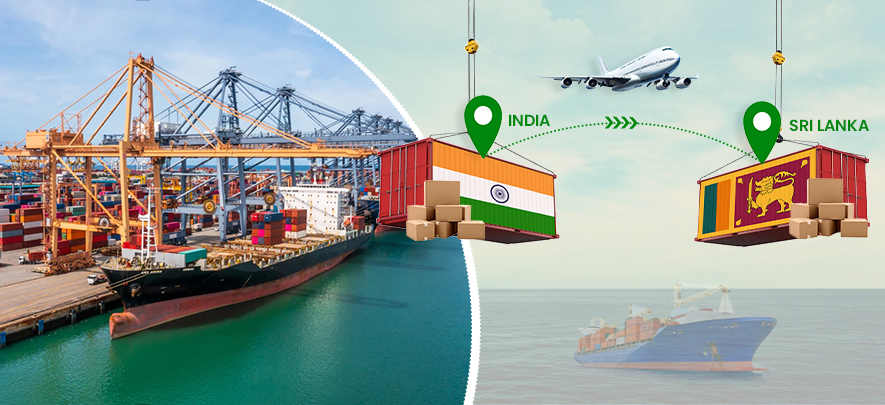
India-Sri Lanka Trade Overview: ISFTA Strategic Advantage
Bilateral Trade Statistics (FY 2023-24)
Overall Trade Performance:
- Total bilateral trade: $5.54 billion
- India’s exports to Sri Lanka: $4.11 billion (74% of total)
- Sri Lanka’s exports to India: $1.42 billion (26% of total)
- Trade balance: India enjoys $2.69 billion surplus
- Growth trajectory: 18.43% increase in imports from India (2024 vs 2023)
India’s Trade Ranking:
- Sri Lanka ranks 29th as export destination for India (FY 2024-25)
- India exports 1.04% of its total export value to Sri Lanka
- India is Sri Lanka’s #1 trade partner by volume and value
ISFTA Benefits Driving Indian Exports
The India-Sri Lanka Free Trade Agreement, signed December 1998 and operational since March 2000, provides exceptional advantages:
Duty Concessions:
- India offers: Duty-free access for 1,351 tariff lines (zero duty list), 50-100% margin of preference on 2,799 tariff lines
- Sri Lanka offers: Duty-free access for 342 tariff lines, phased elimination reaching 100% preference on 2,802 tariff lines by 2008
- Negative lists: India maintains 429 tariff lines, Sri Lanka 1,180 tariff lines
Key Insight: Only 5% of India’s exports to Sri Lanka utilize ISFTA provisions, meaning 95% of Indian exports are naturally competitive even without preferential tariffs. This demonstrates fundamental cost and quality advantages for Indian products in the Sri Lankan market.
ISFTA Special Provisions:
- Garments: 8 million pieces annually at zero duty (TRQ – Tariff Rate Quota)
- Tea: 15,000 MT at 7.5% duty (despite being in the negative list)
- Pepper: 2,500 MT at zero duty annually
- Textiles: 528 tariff lines with 25% margin of preference
Top 15 Products India Exports to Sri Lanka 2026
1. Petroleum Products: $1.2 Billion (29% of Total Exports)
Market Dominance:
- Indian Oil Corporation (IOC) supplies 70% of Sri Lanka’s petroleum needs
- Products: Diesel, petrol, aviation turbine fuel (ATF), LPG, furnace oil
- Strategic importance: Energy security partner during the 2022 forex crisis
Supply Mechanism:
- Credit facility: India extended $500 million petroleum credit line (2022-23)
- Payment terms: 90-day credit via IOC direct supply agreements
- Delivery: Continuous supply via tanker shipments (Chennai/Visakhapatnam refineries to Colombo)
Sri Lankan Dependence:
- Total petroleum imports: ~$1.7 billion annually
- India’s share: 70% ($1.2B), balance from UAE, Singapore
- Reason for dominance: Proximity (2-3 day tanker transit), credit flexibility, reliable supply
Indian Suppliers:
- Indian Oil Corporation (primary)
- Bharat Petroleum Corporation Ltd
- Hindustan Petroleum Corporation Ltd
Market Reality: Sri Lanka’s Ceylon Petroleum Corporation (CPC) remains heavily dependent on Indian supplies despite attempts to diversify, with India’s credit terms and rapid delivery unmatched by alternatives.
2. Rice & Cereals: $450 Million (11% of Exports)
Food Security Partnership:
- Sri Lanka imports 60-70% of its rice consumption needs (domestic production deficit since 2022)
- India is the primary supplier, covering 500,000-600,000 MT annually
- Government-to-government arrangements during the crisis (2022-23) evolved into commercial trade
Rice Varieties Exported:
- Parboiled rice: 55-60% (preferred for Sri Lankan cooking habits)
- Raw white rice: 25-30% (budget segment)
- Basmati rice: 8-10% (premium segment, urban consumers)
- Broken rice: 5-7% (animal feed, food processing)
Pricing Competitiveness:
| Origin | FOB Price ($/MT) | CIF Colombo ($/MT) | Sri Lanka Retail (LKR/kg) |
|---|---|---|---|
| India (non-basmati) | $380-420 | $410-450 | 220-250 |
| Thailand | $480-520 | $520-560 | 280-320 |
| Pakistan (basmati) | $850-950 | $890-990 | 520-580 |
| India (basmati) | $750-850 | $790-890 | 480-520 |
Logistics Advantage:
- Transit time: 2-3 days (Chennai/Kakinada to Colombo) vs 7-10 days from Thailand
- Freight cost: $25-30/MT vs $40-50/MT from Southeast Asia
- Freshness: Recent harvest reaches market faster, reducing storage degradation
Quality Specifications:
- Moisture content: <14% (Sri Lankan standard)
- Broken rice: <5% for premium grades
- Packaging: 25kg, 50kg bags with Sinhala/Tamil bilingual labeling
- Certification: Phytosanitary certificate, fumigation (if required)
Major Indian Exporters:
- KRBL Limited (India Gate basmati)
- Kohinoor Foods
- REI Agro
- Shree Lal Mahal Group
Payment Terms:
- Government tenders: LC 90 days
- Private millers: LC 60 days or DA 45 days
- Established suppliers: 30-day credit terms
3. Pharmaceuticals: $380 Million (9% of Exports)
Market Leadership:
- India supplies 70% of Sri Lanka’s pharmaceutical imports
- Total Sri Lankan pharma market: ~$600 million; imports ~$540 million (90% import-dependent)
- Indian share of imports: $380 million (70%)
Product Categories:
- Generic medicines: $210-230M (antibiotics, cardiovascular, diabetes, pain management)
- Active Pharmaceutical Ingredients (APIs): $80-90M (raw materials for local drug manufacturers)
- Over-the-counter (OTC) drugs: $40-50M (vitamins, supplements, cold/flu medications)
- Hospital supplies: $30-35M (IV fluids, surgical consumables)
Why India Dominates:
- Price advantage: Indian generics 40-60% cheaper than Western brands
- Quality: WHO-GMP certified manufacturing, acceptable to Sri Lankan NMRA
- Product range: 1,500+ registered formulations covering all therapeutic categories
- Credit terms: 90-120 days payment flexibility vs 30-60 days from European suppliers
Regulatory Framework:
- NMRA registration: National Medicines Regulatory Authority approval (12-18 months)
- Fast-track: Established Indian brands (Sun Pharma, Cipla) have streamlined approvals
- Bioequivalence: Required for new formulations (studies accepted from NABL labs in India)
Major Indian Pharma Exporters to Sri Lanka:
- Sun Pharmaceutical Industries (cardiovascular, CNS drugs)
- Cipla (respiratory, anti-infectives)
- Dr. Reddy’s Laboratories (oncology, APIs)
- Lupin (diabetes, cardiovascular)
- Aurobindo Pharma (antibiotics, ARVs)
- Micro Labs (OTC segment)
Distribution Channels:
- Importers/distributors: 15-20 major pharmaceutical importers in Colombo (Colombo Fort area)
- Direct hospital supply: Teaching hospitals, National Hospital Colombo
- Retail chains: OSUSALA (state pharmacy chain), private pharmacy networks
Growth Potential: Sri Lanka’s aging population and expanding healthcare access (post-crisis normalization) project pharmaceutical market growth to $750-800 million by 2028, with India maintaining 65-70% share ($490-560M opportunity).
4. Motor Vehicles & Parts: $320 Million (8% of Exports)
Automotive Market Share:
- Sri Lanka imports 30,000-35,000 vehicles annually (mix of passenger, commercial, two-wheelers)
- Indian vehicles account for 35-40% of imports by volume, 25-30% by value
Product Breakdown:
- Commercial vehicles: $120-140M (Tata, Ashok Leyland trucks, buses)
- Passenger vehicles: $90-110M (Maruti Suzuki, Tata, Mahindra SUVs)
- Three-wheelers (tuk-tuks): $50-60M (Bajaj dominance – 70% market share)
- Auto parts: $40-50M (spare parts, accessories, tires)
Key Indian Automotive Brands in Sri Lanka:
Tata Motors:
- Products: Trucks (1109, 1212), buses (Starbus, Ultra), Nano/Indica cars
- Market position: #1 commercial vehicle brand (45% market share)
- Dealer network: 8 authorized dealers across Colombo, Kandy, Galle, Jaffna
Ashok Leyland:
- Products: Heavy trucks (2516, 3118), buses (Viking, Lynx)
- Market share: 25-30% commercial vehicles
- After-sales: 6 service centers, readily available spare parts
Bajaj Auto:
- Products: Three-wheelers (RE Compact, Maxima, Compact RE Diesel)
- Dominance: 70% three-wheeler market share (iconic yellow/orange Colombo tuk-tuks)
- Spare parts: Widely available (40+ authorized dealers)
Mahindra & Mahindra:
- Products: Bolero, Scorpio, XUV500 SUVs; Alfa three-wheelers
- Market: Premium SUV segment, competing with Japanese brands
Maruti Suzuki (via Indian assembly):
- Products: Alto, WagonR, Swift (CKD kits assembled in India, exported as CBU)
- Market share: 8-10% passenger car segment
Why Indian Vehicles Succeed:
- Right-hand drive: Shared British colonial legacy (same as India)
- Price competitiveness: 20-30% cheaper than Japanese equivalents
- After-sales network: Established service centers, spare parts availability
- Fuel efficiency: Suitable for Sri Lankan budgets (diesel variants popular)
- Road conditions: Indian vehicles designed for similar road quality/climate
Auto Parts Ecosystem:
- OEM parts: Tata Genuine Parts, Ashok Leyland Spares Network
- Aftermarket: Bosch India, MRF Tyres, Exide batteries
- Distribution: Pettah (Colombo) automotive spare parts market (500+ shops)
Challenges:
- Import restrictions: Sri Lanka periodically restricts vehicle imports to conserve forex (2022-23 complete ban, eased 2024)
- High duties: 100-200% import duty + VAT on fully built vehicles
- Competition: Japanese brands (Toyota, Honda, Nissan) dominate premium segment
Payment Terms:
- CKD kits: LC 90-120 days
- CBU vehicles: 50% advance + 50% before shipment
- Spare parts: DA 60 days or credit for established dealers
5. Textiles & Garments: $280 Million (7% of Exports)
Supply Chain Integration:
- India supplies fabric and yarn → Sri Lankan garment factories manufacture → Export to USA/EU
- This backward integration model leverages Sri Lanka’s GSP+ status (duty-free access to EU) combined with Indian fabric quality and pricing
Product Mix:
- Cotton fabric: 40-45% ($110-125M) – shirting, bedding, home textiles
- Synthetic fabric: 25-30% ($70-85M) – polyester, blended fabrics for garments
- Readymade garments: 15-20% ($42-56M) – Indian brands (Raymond, Madura Fashion) retail presence
- Yarn: 10-12% ($28-34M) – cotton yarn for Sri Lankan textile mills
ISFTA Benefits:
- Textiles: 528 tariff lines with 25% margin of preference
- Garments: TRQ of 8 million pieces at zero duty (though most Indian garment exports don’t use this due to origin rule complexities)
Geographic Advantage:
- Tirupur (Tamil Nadu): 350 km from Colombo – knitwear hub supplies t-shirts, innerwear fabric
- Coimbatore: Spinning mills supply yarn to Sri Lankan weavers
- Ludhiana (Punjab): Woolen fabrics for Sri Lankan winter garment exports to Europe
Sri Lankan Buyer Profile:
- Garment factories: 350+ export-oriented factories (Brandix, MAS Holdings, Hirdaramani)
- Fabric importers: 50+ Colombo-based fabric traders (Pettah, Maradana areas)
- Retail chains: Fashion Bug, Odel, Cotton Collection (Indian readymade brands)
Quality Specifications:
- GSM (grams per square meter): 150-200 GSM for shirting, 180-220 for denim
- Color fastness: Minimum Grade 4 (export quality requirement)
- Width: 58-60 inches standard for apparel fabric
- Shrinkage: <3% after washing
Logistics:
- Transit time: 2-3 days (Chennai/Tuticorin to Colombo)
- Freight: $150-200 per ton (ocean freight + port charges)
- Packaging: Rolls (50-100m) wrapped in plastic, cartons for readymade garments
Payment Terms:
- Fabric: LC 90-120 days (garment factories prefer long credit to match export cycles)
- Yarn: DA 75-90 days
- Readymade garments (retail): 60-day credit after delivery
Major Indian Exporters:
- Arvind Limited (denim, shirting fabrics)
- Welspun India (home textiles, towels)
- Vardhman Textiles (yarn)
- Raymond (readymade menswear, retail stores in Colombo)
6. Iron & Steel: $240 Million (6% of Exports)
Construction Boom Demand:
- Sri Lanka’s post-crisis infrastructure push (2024-26) drives steel demand
- Government housing programs, road construction, and Colombo Port expansion
- India supplies 40-45% of Sri Lanka’s steel imports
Product Categories:
- TMT bars (reinforcement steel): $100-120M – construction sector backbone
- Structural steel: $50-60M – I-beams, channels, angles for building frames
- Steel plates: $30-40M – shipbuilding, fabrication
- Galvanized sheets: $25-30M – roofing, industrial applications
- Stainless steel: $15-20M – kitchenware, chemical equipment
Indian Steel Brands in Sri Lanka:
- Tata Steel: TMT bars (Tata Tiscon brand), structural steel
- JSW Steel: TMT bars, galvanized sheets
- SAIL (Steel Authority of India): Plates, structural steel
- Jindal Steel: Galvanized products, color-coated sheets
Pricing Comparison:
| Product | India FOB ($/MT) | CIF Colombo ($/MT) | China FOB ($/MT) | Sri Lanka Retail (LKR/MT) |
|---|---|---|---|---|
| TMT bars (Fe 500) | $580-620 | $620-660 | $560-600 | 260,000-290,000 |
| Structural steel | $650-700 | $690-740 | $630-680 | 290,000-320,000 |
| Galvanized sheets | $750-820 | $790-860 | $720-790 | 340,000-380,000 |
Why Indian Steel Competitive:
- Quality: BIS standards accepted by Sri Lankan engineers and contractors
- Delivery: 3-5 days (Chennai/Vizag to Colombo) vs 15-20 days from China
- After-sales: Indian steel companies maintain technical support teams in Colombo
- Payment flexibility: 60-90 day credit vs 30-day advance from Chinese suppliers
Distribution:
- Importers/stockists: 20+ major steel importers in Colombo (Manning Market, Pettah)
- End-users: Construction companies, fabricators, government projects
Specifications:
- TMT bars: Fe 415, Fe 500, Fe 550 grades (Sri Lankan standard SLS 375)
- Structural steel: ASTM A36 equivalent
- Coating thickness: Galvanized Z120-Z275 (zinc coating grams per square meter)
Logistics:
- Transit: 3-5 days via container (20′ container holds ~25-28 MT steel)
- Port: Colombo Port direct discharge to stockyards
Payment:
- LC 60-90 days standard
- Government projects: LC 120 days (extended credit acceptable)
7. Machinery & Equipment: $210 Million (5% of Exports)
Industrial Machinery Demand:
- Sri Lanka’s manufacturing sector revival (post-crisis) requires machinery imports
- Textile machinery, food processing equipment, construction equipment from India
Product Breakdown:
- Textile machinery: $60-70M (spinning, weaving, knitting machines)
- Construction equipment: $50-60M (excavators, cranes, concrete mixers)
- Agricultural machinery: $35-45M (tractors, harvesters, tillers)
- Industrial pumps & motors: $25-30M (water pumps, electric motors)
- Food processing equipment: $20-25M (rice mills, flour mills, dairy equipment)
- Electrical machinery: $20-25M (transformers, generators, switchgear)
Major Indian Machinery Exporters:
- Larsen & Toubro (L&T): Construction equipment, electrical products
- Mahindra Tractors: Agricultural machinery (#1 tractor brand in Sri Lanka)
- Crompton Greaves/CG Power: Transformers, motors
- Kirloskar Brothers: Pumps, engines
- Lakshmi Machine Works: Textile machinery (spinning, weaving)
ISFTA Advantage:
- Most machinery under zero duty or 50-100% margin of preference categories
- Saves 10-15% duty cost vs non-FTA competitors
After-Sales Service:
- Service centers: Major Indian brands maintain Colombo service centers
- Spare parts: 24-48 hour spare part delivery from India (vs 2-4 weeks from Europe/China)
- Technician support: Indian engineers reach Colombo within 24 hours (visa-free travel for Indians)
Why Indian Machinery Preferred:
- Price: 30-40% cheaper than European equivalents
- Technology fit: Mid-level technology suitable for Sri Lankan industries
- Service network: Established presence, quick response
- Training: Indian suppliers provide operator training in local languages (Tamil/Sinhala)
Payment Terms:
- Small machinery (<$50,000): 30% advance + 70% before shipment
- Large equipment (>$50,000): LC 90-120 days
- Government projects: LC 180 days acceptable
8. Organic Chemicals: $180 Million (4% of Exports)
Industrial Chemicals Market:
- Dyes, pigments, and intermediates for Sri Lankan textile and manufacturing industries
- Pharmaceutical intermediates for local drug manufacturing
Product Categories:
- Dyes & pigments: $80-90M (textile dyeing, printing inks)
- Pharmaceutical intermediates: $40-50M (APIs, drug manufacturing inputs)
- Agrochemicals: $25-30M (pesticide intermediates, formulations)
- Other organic chemicals: $25-30M (rubber chemicals, plastic additives)
Indian Chemical Suppliers:
- Aarti Industries (dyes, pigments)
- Atul Limited (agrochemicals)
- Jubilant Pharmova (pharma intermediates)
- Gharda Chemicals (agrochemicals)
Application:
- Textile industry: Sri Lankan garment dye houses use Indian reactive dyes, disperse dyes
- Pharmaceuticals: 25+ Sri Lankan drug manufacturers source APIs/intermediates from India
- Agriculture: Pesticide formulation units use Indian technical-grade chemicals
Payment Terms:
- LC 90 days (chemical handling requires inspection and quality clearance)
9. Spices: $95 Million (2% of Exports)
Spice Export Breakdown:
- Black pepper: $28-32M (Sri Lanka re-exports to the Middle East after cleaning/grading)
- Turmeric: $22-25M (food processing, retail)
- Cumin seeds: $15-18M (ethnic food, bakery industry)
- Cardamom: $10-12M (food flavoring, premium tea blending)
- Coriander seeds: $6-8M (curry powder manufacturing)
- Other spices: $12-15M (ginger, garlic, chili, fennel)
Market Dynamics:
- HoReCa demand: 1,500+ hotels, 5,000+ restaurants (tourism recovery to 4M visitors by 2027)
- Food processing: Curry powder manufacturers, instant noodle flavoring (Nestlé, Prima)
- Re-export: Sri Lanka imports Indian spices → cleans, grades, repackages → exports to Maldives, Seychelles
ISFTA Benefits:
Logistics Advantage:
- 12-hour delivery: Tuticorin-Colombo ferry enables fresh spice delivery (critical for volatile oil content preservation)
- Frequency: Daily sailings allow flexible order sizes (500kg-5 MT)
Pricing Competitiveness:
| Spice | India FOB ($/kg) | CIF Colombo ($/kg) | Sri Lanka Retail (LKR/kg) | Margin % |
|---|---|---|---|---|
| Black pepper | $6.80-7.20 | $7.00-7.40 | 3,600-4,000 | 40-45% |
| Turmeric | $3.20-3.60 | $3.40-3.80 | 1,800-2,100 | 35-40% |
| Cumin | $3.50-3.90 | $3.70-4.10 | 2,000-2,400 | 38-42% |
| Cardamom | $38-42 | $39-43 | 22,000-26,000 | 42-48% |
Sri Lankan Spice Importers:
- Pettah spice traders (50+ wholesale businesses)
- Supermarket chains: Cargills, Keells, Arpico (private label spices)
- Food processors: Ruhunu, Edinborough (curry powder brands)
Quality Specifications:
- Moisture: <10% (Sri Lankan Customs requirement)
- Purity: 98-99% (machine-cleaned preferred)
- Volatile oil: Black pepper 2.5%+, cumin 2.5%+ (aroma quality)
- Packaging: 25kg PP bags bulk, 100g-500g retail pouches
Payment:
- LC 45-60 days (shorter than Middle East 60-90 days)
- Established traders: 30-day credit
10-15. Other Major Export Categories (Summary)
10. Sugar: $85 Million
- Seasonal exports during Sri Lankan shortages
- Indian raw sugar, refined sugar
- Payment: LC 60 days
11. Cement: $75 Million
- Construction boom demand
- Brands: UltraTech, ACC, Ambuja Cement
- Bulk shipments: 25,000-30,000 MT per vessel
12. Cotton: $68 Million
- Raw cotton for Sri Lankan spinning mills
- Cotton yarn for weaving sector
- ISFTA preference benefits
13. Plastics & Polymers: $62 Million
- PVC, HDPE, PET resins
- Plastic packaging materials
- Reliance Industries major supplier
14. Electrical Equipment: $58 Million
- Cables, wires, transformers
- Brands: Polycab, Havells, Finolex
- Colombo electrical wholesalers
15. Footwear: $45 Million
- Leather shoes, sports footwear
- Brands: Bata India, Relaxo
- Price advantage vs Chinese footwear
ISFTA vs Non-FTA: Duty Savings for Indian Exporters
| Product Category | MFN Duty (Non-FTA) | ISFTA Duty | Savings on $100K Shipment |
|---|---|---|---|
| Textiles (fabric) | 15% | 0-5% | $10,000-15,000 |
| Machinery | 10-15% | 0% (Zero Duty List) | $10,000-15,000 |
| Spices | 15% | 0-5% | $10,000-15,000 |
| Pharmaceuticals | 10% | 0% | $10,000 |
| Footwear | 25% | 15% | $10,000 |
| Plastics | 10% | 0-5% | $5,000-10,000 |
Key Insight: Even without using ISFTA (only 5% of exports claim it), Indian products remain competitive, but claiming ISFTA adds 10-15% additional margin.
How to Start Exporting to Sri Lanka
Step 1: Verify ISFTA Eligibility
- Check if your product is in Zero Duty List or the Residual List (4,000+ products eligible)
- Obtain Certificate of Origin (CoO) from Indian Chamber of Commerce
- Ensure 35% value addition in India (Rules of Origin requirement)
Step 2: Find Sri Lankan Importers
- Indian High Commission Colombo: Commercial Wing maintains importer database
- Sri Lanka-India Business Council: Networking events
- Online: Lanka Business Online, trade directories
Step 3: Logistics Planning
- Tuticorin-Colombo ferry: 12 hours (best for <10 MT, perishables)
- Chennai-Colombo ocean freight: 2-3 days (20′ container $400-600)
- Air cargo: 4-6 hours (pharmaceuticals, urgent orders, ₹80-120/kg)
Step 4: Documentation (12 Documents)
- Commercial Invoice (USD or INR accepted)
- Packing List
- Bill of Lading/Airway Bill
- Certificate of Origin (ISFTA) – critical for duty benefit
- Certificate of Analysis (pharmaceuticals, food products)
- Phytosanitary Certificate (agricultural products)
- Insurance Certificate
- CUSDEC (Sri Lankan Customs electronic declaration)
- Product-specific certificates (pharma NMRA, food SLSI standards)
Step 5: Payment Terms
- First shipment: 30% TT advance + 70% against documents
- Established: LC 60-90 days standard
- Currency: USD invoicing common, INR accepted for small transactions
Start Exporting to Sri Lanka in 2026
Sri Lanka’s $4.11 billion import market from India (FY 2023-24) with 18.43% growth trajectory (2024 vs 2023) represents an accessible, high-potential opportunity leveraging geographic proximity (31 km), ISFTA duty benefits (0% on 4,000+ products), and 24-hour delivery capability unmatched by any other export destination. The post-crisis recovery phase creates immediate demand across infrastructure (cement, steel), consumer goods (textiles, footwear), and essential supplies (food, pharmaceuticals), with Indian exporters enjoying 95% natural competitiveness even without FTA usage.
Priority export sectors: Pharmaceuticals ($380M, 70% market share with room to grow), spices ($95M to $150M potential via HoReCa/tourism), machinery ($210M with service network advantage), and textiles ($280M backward integration with Sri Lankan garment exports) offer established channels and immediate buyer interest.