
India’s exports to Russia reached $4.88 billion in 2024-25, representing a dramatic transformation in bilateral economic relations driven by geopolitical shifts and Russia’s import substitution strategy following Western sanctions. While India imports $67.15 billion from Russia (primarily crude oil, fertilizers, and defense equipment), the export side shows remarkable diversification across 10 major product categories led by machinery ($557 million), pharmaceuticals ($520 million), ceramics ($160 million), and agricultural products including rice, seafood, tea, and spices ($356 million combined). The Indian government has identified 300 additional products with high export potential to Russia, currently valued at just $1.7 billion compared to Russia’s total imports of $37.4 billion in these categories, representing a $35.7 billion untapped opportunity as both nations work toward their $100 billion bilateral trade target by 2030.
This guide provides a detailed breakdown of India’s current export basket to Russia, high-growth opportunity sectors (pharmaceuticals, engineering, agriculture), payment mechanisms (Rupee-Rouble settlement eliminating dollar dependency), and actionable market entry strategies for Indian exporters seeking to capitalise on Western supplier exits, creating space worth $200-300 million across multiple sectors.
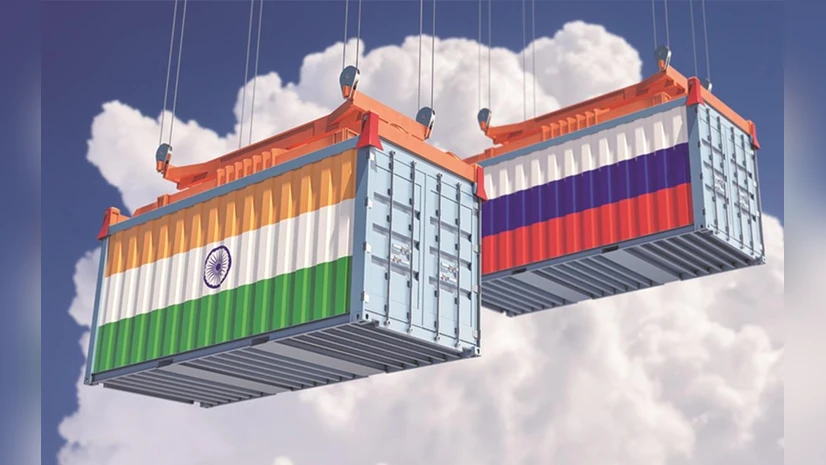
India-Russia Trade Overview: $72 Billion Bilateral Relationship
Trade Balance & Growth Trajectory
Current Trade Statistics (2024-25):
- India’s exports to Russia: $4.88 billion
- India’s imports from Russia: $67.15 billion
- Total bilateral trade: $72.03 billion
- Trade deficit: $62.27 billion (heavily weighted toward energy imports)
Historical Growth Context:
- 2021-22: $13 billion total trade (pre-Ukraine conflict)
- 2022-23: $49 billion (355% surge driven by Russian oil purchases)
- 2024-25: $72 billion (47% growth)
- Target 2030: $100 billion bilateral trade goal set by both governments
The massive trade imbalance exists because India’s Russian oil imports jumped from $2 billion (2021) to $60+ billion (2024) as Indian refiners (Reliance, Nayara Energy, IOC) became the largest buyers of Russian crude following European sanctions. However, this creates opportunity: Russia is eager to balance trade by importing more Indian goods to utilize accumulated rupee reserves and reduce the $62 billion deficit.
Why Russia Needs Indian Exports Now
Import Substitution Urgency:
- Western sanctions impact: 70-80% drop in EU exports to Russia since 2022
- Supply gaps: Pharmaceuticals, machinery, chemicals, agriculture, consumer goods
- Diversification imperative: Russia seeking non-Western suppliers (China, India, Turkey, UAE)
- Payment breakthrough: Rupee-Rouble mechanism eliminates dollar dependency
“Western exit creates space for Indian exporters,” as Russian businesses actively seek alternatives across sectors where European/American suppliers dominated. Indian companies face lower competition and higher margins compared to saturated Western markets.
Top 10 Products India Exports to Russia (2024-25)
1. Machinery & Mechanical Appliances: $557 Million
HS Code 8471 – Primary Category:
- Industrial machinery for manufacturing
- Construction equipment
- Agricultural machinery (tractors, harvesters)
- Textile machinery
- Printing and packaging equipment
Growth Drivers:
- Russia’s infrastructure modernization push
- Replacement of sanctioned European machinery (German, Italian brands)
- “Make in India” machinery competitively priced (30-40% below European equivalents)
Key Indian Exporters:
- Larsen & Toubro (construction equipment)
- Mahindra & Mahindra (tractors, farm equipment)
- Crompton Greaves, ABB India (electrical machinery)
Opportunity: Russia imports $12-15 billion machinery globally; India’s $557M represents only 4-5% market share, with room to triple to $1.5-2 billion as Russian buyers diversify away from China (quality concerns) and sanctioned Western suppliers.
2. Pharmaceutical Products: $520 Million (High-Growth Sector)
HS Code 3004 – India’s Strategic Advantage:
India is globally recognized as the “pharmacy of the world” and Russia’s top pharmaceutical supplier, filling the gap left by sanctioned European pharma companies:
Export Breakdown:
- Generic medicines: $280-320M (antibiotics, cardiovascular drugs, diabetes medications)
- Active Pharmaceutical Ingredients (APIs): $120-150M (raw materials for Russian drug manufacturers)
- Vaccines: $40-60M (COVID, flu, childhood immunization)
- Over-the-counter medicines: $30-50M (pain relievers, vitamins, supplements)
Market Potential:
- Russia’s total pharma imports: $9.7 billion annually
- India’s current share: $520M (5.4%)
- Realistic 5-year target: $3-5 billion (30-50% share) with streamlined regulatory approvals
Regulatory Challenge & Solution:
- Barrier: Russian drug registration takes 18-24 months per product
- Government solution: India-Russia working on fast-track approval corridor for Indian generics
- Opportunity: $9.2 billion gap between India’s current exports and Russia’s total imports represents the largest single-sector opportunity
Key Indian Pharma Exporters to Russia:
- Sun Pharmaceutical Industries
- Dr. Reddy’s Laboratories
- Cipla
- Lupin
- Aurobindo Pharma
3. Ceramics: $160 Million
HS Code 6907 – Ceramic Tiles Dominance:
Indian ceramic tiles have captured significant Russian market share due to quality and competitive pricing:
Product Categories:
- Floor tiles (600x600mm, 800x800mm standard sizes)
- Wall tiles (300x450mm, 300x600mm)
- Vitrified tiles (polished, glazed)
- Porcelain tiles (premium segment)
Why India Leads:
- Price advantage: 20-30% cheaper than Italian/Spanish tiles (former suppliers)
- Quality: Indian tiles meet Russian GOST standards for frost resistance (critical for -30°C winters)
- Designs: Modern, European-style aesthetics at Asian prices
Key Exporters:
- Kajaria Ceramics
- Somany Ceramics
- Nitco Tiles
- RAK Ceramics India
Growth Potential: Russia’s construction boom (government housing programs) drives demand for 400-500 million square meters of tiles annually; India currently supplies 15-20%, with potential to reach 30-35% ($350-400M exports).
4. Live Animals & Animal Products: $158 Million
HS Code 0306 – Buffalo Meat Dominance:
India is the world’s largest buffalo meat exporter, and Russia represents a growing market:
Export Breakdown:
- Frozen buffalo meat (carabeef): $120-130M
- Live animals: $15-20M (breeding cattle, buffaloes)
- Other animal products: $10-15M (leather, bones, hides)
Market Dynamics:
- Russia seeks protein alternatives after reduced Brazilian/Argentinian beef imports
- Indian buffalo meat priced $3.50-4.00/kg vs Australian beef $6-7/kg
- Halal certification advantage for Russian Muslim populations (15-20 million)
Certification Requirements:
- Russian veterinary approval (Rosselkhoznadzor)
- Halal certification for certain regions
- Cold chain logistics: -18°C frozen storage throughout transit
5. Cereals: $97 Million (Rice Dominance)
HS Code 1006 – Rice Varieties:
India, the world’s largest rice exporter, supplies diverse varieties to Russia:
Export Categories:
- Non-basmati rice: $60-70M (parboiled, raw white rice for food processing)
- Basmati rice: $15-20M (premium segment for ethnic stores, restaurants)
- Other cereals: $10-15M (millet, buckwheat, grain sorghum)
Growth Drivers:
- Russian Far East (Vladivostok region) prefers Asian rice over European wheat-based staples
- Indian diaspora (50,000+ IT professionals, students) drives basmati demand
- Food processing industry uses parboiled rice for ready-meals
Opportunity: Russia imports $800-900M rice globally (primarily from Thailand, Vietnam, Pakistan); India’s $97M represents 10-12% share with potential to reach 20-25% ($180-220M) through competitive pricing and diversified varieties.
6. Prepared Foodstuff: $88 Million
HS Code 2101 – Processed Foods:
Russia diversifying food sources creates demand for Indian ready-to-eat products:
Product Range:
- Processed fruits and vegetables (canned, frozen)
- Fruit juices and concentrates
- Ready-to-cook meals (Indian curry bases, masala mixes)
- Coffee extracts and concentrates
- Confectionery and snacks
Key Exporter Example:
- Girnar Food and Beverages Pvt. Ltd. – Major supplier of instant tea, coffee, masala mixes to Russian retail chains
Retail Penetration: Indian food products increasingly visible in Moscow/St. Petersburg supermarkets (Perekrestok, Pyaterochka, Magnit chains), creating repeat demand.
7. Inorganic Chemicals: $80 Million
HS Code 2818 – Industrial Chemicals:
Russia imports Indian inorganic chemicals for fertilizers, pharmaceuticals, and industrialization:
Key Products:
- Phosphoric acid (fertilizer production)
- Sulfuric acid (industrial processes)
- Titanium dioxide (paints, coatings)
- Sodium compounds (detergents, glass manufacturing)
Strategic Fit: India’s large chemical industry (Tata Chemicals, Gujarat Alkalies) can scale exports as Russia’s domestic chemical production faces raw material shortages due to sanctions.
8. Vegetable Products: $75 Million
HS Code 1302 – Fresh & Dried Vegetables:
Indian vegetable exports to Russia include:
Product Categories:
- Fresh: Onions, garlic, cabbage, root vegetables
- Dried: Grapes (raisins), dried vegetables
- Extracts: Vegetable-based pharmaceutical/food ingredients
Logistics Challenge: Fresh vegetables require cold chain (2-4°C) with 25-30 day transit time (Nhava Sheva → Vladivostok → Moscow rail); dried products easier to export.
9. Coffee, Tea, Mate & Spices: $73.7 Million
HS Code 0902 – Beverage & Spices Category:
Detailed breakdown based on 2024 data:
Tea: $74.19 Million (Dominates Category)
- Assam black tea (CTC, Orthodox grades)
- Darjeeling tea (premium segment)
- Instant tea (growing segment)
Spices: $31.6 Million Total
- Ginger, turmeric, thyme, bay leaves: $6.65M
- Black pepper, capsicum: $3.75M
- Cumin, coriander, anise, fennel: $3.24M
- Cardamom, nutmeg, mace: $153K (emerging)
Growth Opportunity: Russia imports $400-500M spices globally; India’s 7-8% share can realistically double to 15-20% ($60-100M) through GOST-R certification and direct importer relationships.
10. Textiles & Garments: $46.7 Million
HS Code 6203 – Apparel & Fabrics:
Indian textile exports include:
Product Range:
- Ready-made garments (men’s, women’s wear)
- Home textiles (bed linen, towels, curtains)
- Technical textiles (industrial fabrics)
- Leather garments and accessories
Opportunity: Russia’s textile/apparel imports total $8-10 billion annually (primarily from China, Turkey, Bangladesh); India’s $47M represents <1% share, with significant room for growth in quality mid-segment (between Chinese low-cost and European luxury).
Emerging High-Potential Sectors: $35.7 Billion Opportunity
The Indian government identified 300 products where India currently exports only $1.7 billion to Russia while Russia’s total global imports of these same products are $37.4 billion, creating a $35.7 billion gap.
Engineering Goods: $6-8 Billion Potential
Current: India exports $1.2-1.5 billion engineering products
Russia’s total imports: $25-30 billion (gap: $23-28 billion)
High-Demand Categories:
- Auto components (spare parts, accessories)
- Electrical equipment (transformers, switchgear, cables)
- Metal products (steel structures, fasteners, hand tools)
- Pumps and valves (industrial, agricultural applications)
Indian Advantage:
- Engineering exports globally competitive ($112 billion total Indian engineering exports)
- Lower cost than European alternatives (25-35% savings)
- Established supply chains can pivot to Russia with GOST-R certification
Chemicals & Agrochemicals: $3-5 Billion Potential
Sub-sectors:
- Organic chemicals (dyes, pigments, intermediates)
- Agrochemicals (pesticides, insecticides, herbicides – Russia’s agriculture needs)
- Specialty chemicals (water treatment, oil field chemicals)
Market Entry: Russian Ministry of Industry actively seeking chemical imports to reduce dependence on China (current 45% share).
Agriculture & Food Products: $5-8 Billion Potential
Beyond current cereals/spices:
- Tropical fruits: Mangoes, pomegranates, grapes (Indian varieties gaining acceptance)
- Shrimp & seafood: Russia lost European suppliers; India (#1 global shrimp exporter) can fill gap
- Sugar: India (#2 global producer) can export during Russian domestic shortages
- Processed foods: Indian snacks, ready-meals for ethnic market and mainstream retail
Regulatory Pathway: Certification streamlining (Rosselkhoznadzor veterinary/phytosanitary approvals) under discussion during Putin’s December 2024 Delhi visit.
Labour-Intensive Goods: $2-3 Billion Potential
Categories:
- Handicrafts (home decor, gifts)
- Footwear (leather shoes, sports footwear)
- Furniture (wooden, metal furniture)
- Processed leather goods (bags, belts, wallets)
Opportunity: “Labour-intensive industries have strong export potential due to India’s competitiveness and Russia’s large consumer base”. Russian consumers seek affordable quality products; Indian manufacturers offer 30-50% price advantage over European brands.
Payment Mechanisms: Rupee-Rouble Settlement Breakthrough
Special Rupee Vostro Accounts (SRVAs)
The Reserve Bank of India cleared faster India-Russia payments through revised SRVA guidelines in August 2025, eliminating banking bottlenecks:
How It Works:
- Russian bank opens Rupee-denominated account (vostro account) with Indian bank
- Indian exporter invoices in INR (₹50 lakh for machinery shipment)
- Russian buyer’s bank converts Roubles → Rupees at agreed reference rate
- Rupees credited to Indian exporter’s account via SRVA within 15-20 days (vs 60 days for USD LC)
Benefits:
- No dollar dependency: Eliminates currency conversion costs (saves 2-3%)
- Reduced exchange risk: No USD/INR volatility exposure
- Lower banking charges: 0.5-0.75% vs 1.25-1.5% for USD transactions
- Sanctions-proof: SWIFT alternative financial messaging networks operational
Current Status: 90% of India-Russia trade now settled in national currencies (Rupee/Rouble).
Alternative: Chinese Yuan (CNY) Settlement
For exporters concerned about Rouble volatility (±20-25% annual fluctuation):
- Russian buyers pay in CNY (Russia holds significant Yuan reserves)
- Indian exporters receive CNY in their bank accounts (ICICI, SBI offer CNY accounts)
- Conversion: CNY → INR at stable exchange rate (±3-5% volatility vs ±20% Rouble)
Tri-Lateral via UAE: Russia pays in UAE Dirham → UAE intermediary converts to INR (used extensively in oil trade).
Market Entry Strategy for Indian Exporters
Step 1: Product Certification (12-16 Weeks)
GOST-R Certification (Mandatory):
- What: Russian national standards conformity for food, machinery, electronics, chemicals
- Cost: ₹1.8-2.5 lakh per product category
- Process: Apply through Russian certification body → Lab testing → Certificate valid 1-3 years
- Timeline: 12-16 weeks first-time certification
Additional Certifications:
- Pharma: Russian Ministry of Health registration (18-24 months standard, fast-track being developed)
- Food products: Rosselkhoznadzor veterinary/phytosanitary approval
- Electronics: EAC (Eurasian Conformity) marking if targeting broader Eurasian Economic Union
Step 2: Importer Identification
Resources:
- Indian Embassy Moscow Commercial Wing: Verified importer database
- Russian Trade Mission (Delhi/Mumbai): Facilitates buyer-seller introductions
- Trade shows: WorldFood Moscow (September annually), Agroprodmash (October), ChemShow Russia
- Online platforms: Ozon Marketplace (35M users), Wildberries (40M+ users) for D2C
Initial Approach:
- Send product catalogs + GOST-R certificate copies
- Offer 1kg samples via DHL/FedEx (₹5,000-8,000 per shipment)
- Pricing: Quote in Roubles or Rupees (avoid USD for easier settlement)
Step 3: First Shipment (30-45 Days)
Logistics Routes:
- Primary: Nhava Sheva/Mundra → Vladivostok (22-25 days) → Trans-Siberian rail to Moscow (7-10 days)
- Alternative: Iran INSTC corridor (18-22 days, 30% faster but complex documentation)
- Freight: $3,000-4,000 per 20′ container via Vladivostok route
Payment Terms:
- First order: 30-40% TT advance + 60-70% against documents (Rupee settlement)
- Established: LC 60-90 days via SRVA or credit terms for trusted suppliers
Step 4: Scaling & Market Penetration
Year 1 Target: $500,000-1 million exports (5-10 containers per product)
Year 2-3 Target: $3-5 million (diversify across 3-5 product categories)
Distribution Strategy:
- B2B bulk: Focus Moscow/St. Petersburg importers first (60% of Russian purchasing power)
- Regional expansion: Siberian cities (Novosibirsk, Yekaterinburg) – lower competition
- E-commerce: Ozon/Wildberries for consumer products (30-50% higher margins)
Key Takeaways: Why Export to Russia in 2026
Strategic Advantages:
- Western exit: $200-300M supply gaps across pharmaceuticals, machinery, agriculture
- Payment breakthrough: Rupee-Rouble settlement eliminates 60-day delays to 15-20 days
- Government support: Both nations committed to $100B trade target by 2030
- Lower competition: Fewer Indian exporters active vs saturated USA/EU markets
- Higher margins: 15-25% better than price-sensitive Western markets
Realistic Export Potential by Sector:
- Pharmaceuticals: $520M current → $3-5B potential (5-year)
- Engineering: $1.5B current → $6-8B potential
- Agriculture/Food: $356M current → $1.5-2B potential
- Chemicals: $80M current → $500M-1B potential
Action Steps:
- Identify your product fit in 300 high-potential categories
- Apply for GOST-R certification (₹1.8-2.5L, 12-16 weeks)
- Contact Indian Embassy Moscow for verified importer lists
- Quote in Roubles/Rupees for SRVA settlement advantage
- Target first shipment within 90-120 days from decision
India’s exports to Russia have grown 355% in three years ($13B to $72B total trade), with the export side showing only 2x growth ($2.5B to $4.88B), indicating massive room for acceleration as Russia actively seeks import diversification away from sanctioned Western suppliers.