
Spices export from India in 2026 is a ₹37,000+ crore opportunity, with India shipping spices to over 180 countries and holding around 70% of global spice production and a dominant share in chilli, turmeric, cumin, and pepper exports. With the right registrations, documentation, buyer targeting, and quality control, a small or mid-sized exporter can realistically earn a profit of ₹12–18 lakh per 20-foot container on high-demand products like cumin, turmeric, and chilli.
Below is a focused, readable guide you can use directly on your “spices export from India” page and then extend with your own buyer directories and CTAs.
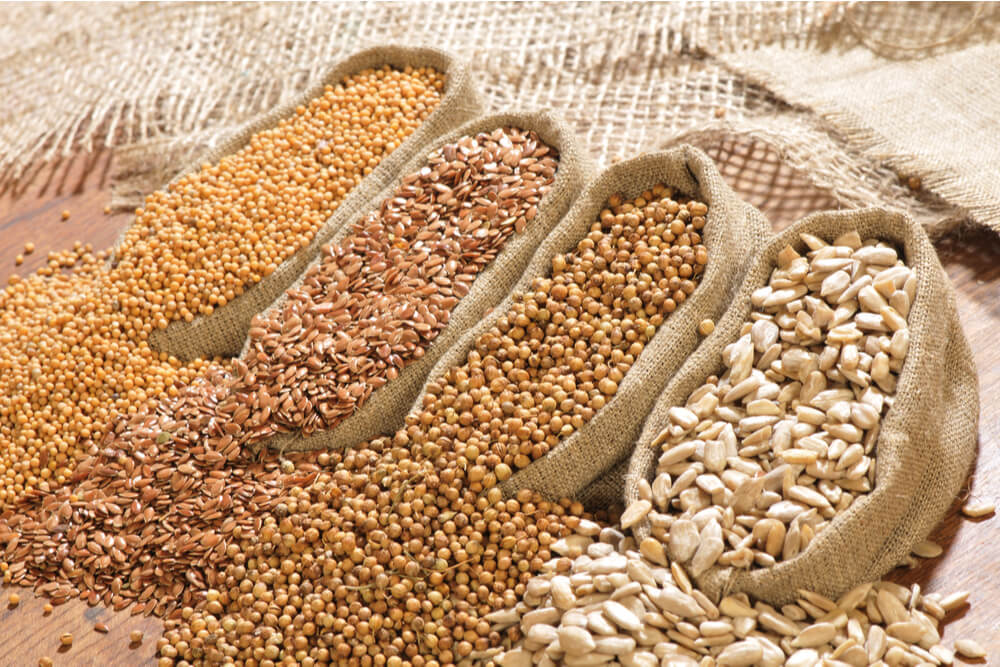
India’s Spices Export Opportunity in 2026
India exported spices worth approximately $4.4–$ 4.5 billion in 2023–24, led by chilli, turmeric, cumin, pepper, and cardamom. This is projected to grow further in 2025–26 as demand rises in the USA, EU, Middle East, and East Asia. The USA, UAE, China, Bangladesh, Thailand, Germany, and the UK are among the top importers of Indian spices, with the USA alone accounting for roughly $1.4 billion of imports.
Key advantages of exporting spices from India include:
- Product depth – India is the largest producer and exporter of chilli, turmeric, cumin and among the top exporters of pepper, ginger, and cardamom.
- Cost advantage – Indian spices are often 20–35% cheaper than equivalent grades from other origins while still meeting global quality benchmarks.
- Certification ecosystem – The Spices Board, APEDA, and NPOP/organic certifiers make it easier for exporters to meet US/EU/UAE standards when properly used.
Registrations Needed to Start Spices Export from India
Before you can legally export spices, you must complete a few core registrations. These are one-time or long-term steps and form the foundation of your export business.
1. IEC (Import Export Code)
- Issued by: DGFT (Directorate General of Foreign Trade).
- Purpose: Mandatory for any export or import activity from India.
- Process: Online application using PAN, Aadhaar, bank details and email/phone verification.
- Cost & time: Government fee is low and processing typically completes within about a week if documents are correct.
2. FSSAI License for Manufacturing/Export
- Issued by: FSSAI (Food Safety and Standards Authority of India).
- Purpose: Required if you manufacture, process, pack, or store food products like spices for export.
- Key points:
- You need a Central FSSAI license for export-oriented units.
- Requirements include premises details, food safety management plan, and basic hygiene infrastructure.
- Validity: 1–5 years, renewable.
3. APEDA Registration (RCMC)
- Issued by: APEDA (Agricultural and Processed Food Products Export Development Authority).
- Purpose: APEDA registration-cum-membership certificate (RCMC) is mandatory to export scheduled agricultural products including many spices, and is often required to obtain a phytosanitary certificate and claim export incentives.
- Benefits: Access to APEDA schemes, trade fairs, export promotion, and capacity-building programs.
4. Spices Board Registration
- Issued by: Spices Board India.
- Purpose: Registration as an Exporter of Spices (CRES) is required for those exporting spices and spice products.
- Benefits: Access to Spices Board labs, quality evaluation, and certain financial assistance under schemes.
Key Documents for Spices Export Shipments
Once registrations are done, each shipment requires a standard document set. Missing or incorrect documentation is a common cause of delay or rejection, so standardising this early is critical.
Core documents include:
- Commercial Invoice – Shows buyer and seller details, HS code, description of goods, quantity, unit price, and total value in agreed currency.
- Packing List – Details packing type (bags/cartons), net/gross weight, number of packages, and container details.
- Bill of Lading (B/L) – Issued by the shipping line, it is proof of shipment and is required for LC negotiation or final payment.
- Certificate of Origin – Issued by Chambers of Commerce or authorized agencies; may be on preferential forms (like Form A or FTA-specific formats) if applicable.
- Phytosanitary Certificate – Issued through APEDA/Plant Quarantine authorities to confirm the consignment is free from quarantine pests and meets the importing country’s plant health requirements.
- FSSAI/Health Certificate – In many markets, a health certificate is required to confirm the product meets safety standards.
- Lab Test Reports (CoA) – NABL-accredited lab reports confirming moisture, purity, microbial limits, and sometimes pesticide residues or aflatoxins, depending on destination.
- Insurance Policy – If you are selling on CIF or CIP terms, marine cargo insurance is essential to cover transit risks.
For specific markets:
- USA – FDA Food Facility Registration and Prior Notice for each shipment are mandatory for food consignments, including spices.
- EU – TRACES NT notification for many food products and strict compliance with MRL limits for pesticides are enforced; failure to meet limits can result in rapid alert rejections.
- UAE/Saudi – Often demand Halal certification and, in some cases, additional conformity certificates such as ESMA (UAE) or SFDA-linked documentation (Saudi Arabia).
Major Spices Exported from India & Typical Specifications
Different spices have different standard specifications in export contracts, and buyers often insist on minimum active component values (curcumin, volatile oil, etc.) as well as cleanliness and appearance criteria.
Cumin Seeds (HS 0909)
- Major origins: Unjha (Gujarat), Rajasthan.
- Key specs:
- Purity: 99–99.5% (Sortex cleaned).
- Volatile oil: ~2–3.5% depending on grade.
- Moisture: usually <10%; premium buyers prefer <8%.
- Top markets: USA, UAE, Vietnam, Bangladesh, and Europe, where Indian cumin is preferred for aroma and oil content.
Turmeric (HS 091030)
- Major origins: Erode, Salem, Alleppey, Sangli.
- Key specs:
- Top markets: USA, Bangladesh, UAE, Malaysia, Japan, and EU (especially Germany) as demand for health and supplement uses grows.
Chilli (HS 0904)
- Major origins: Guntur (Andhra Pradesh), Byadgi (Karnataka).
- Key specs:
- ASTA color: 80–160+ depending on variety and buyer requirement.
- Scoville Heat Units (SHU): 20,000–80,000+ depending on type.
- Forms: Whole, crushed, powder.
- India is the world’s largest chilli exporter, with chilli alone contributing more than $500 million annually.
Black Pepper (HS 0904.11)
- Major origins: Kerala, Karnataka, Tamil Nadu.
- Key specs:
- Top markets: USA, Europe (Germany, Netherlands), UAE, and other Middle Eastern countries.
Cardamom, Coriander, Ginger & Others
- Cardamom exports are heavily linked to Gulf demand, especially Saudi Arabia and UAE, with pod size (7–8 mm) and color being key.
- Coriander, fennel, fenugreek and blends (masalas) have strong demand in Asia, the Middle East, and increasingly in Europe for ethnic cuisine and ready-mix segments.
Choosing Target Markets for Spices Export from India
A practical way to grow is to focus on 2–3 markets at a time, matching your product strengths with specific country demand and regulatory requirements.
USA
UAE & Middle East
- Demand: Strong for cardamom, pepper, cumin, chilli, and mixed masalas; a large part of imports are re-exported to other GCC and African markets.
- Requirements:
Europe (Germany, Netherlands, UK, others)
- Demand: Organic and residue-controlled spices, particularly turmeric, coriander, peppers, and herbs.
- Requirements:
Starting with markets where documentation and logistics are simpler (such as UAE or some Asian destinations) and then progressing towards stricter markets like the EU and USA is a common growth path for new exporters.
Basic Export Process Flow: From India to Buyer
Once you have registrations and target markets, each export order typically follows this flow:
- Product selection and specification agreement – You and the buyer finalise variety, grade, moisture, active content (like curcumin or volatile oil), packaging, and Incoterms (FOB, CIF, etc.).
- Price negotiation & contract – Formal or email-based contract covering price, payment terms (LC or TT), shipment schedule, and quality standards.
- Production/Procurement & Quality Checks – Raw material sourcing, cleaning, grading, and, if applicable, grinding and blending—all with internal QC checks.
- Laboratory Testing – NABL-accredited CoA for parameters such as moisture, microbial load, heavy metals, aflatoxins, and residues specific to the destination market.
- Documentation Preparation – Commercial invoice, packing list, certificates (origin, health, phytosanitary, organic, halal, etc.) prepared and, if LC, matched exactly to LC terms.
- Customs Clearance & Stuffing – Filing shipping bill on Indian customs portal, physical/EDI clearance, and container stuffing at the port or ICD.
- Shipment & Tracking – Container loaded on vessel, tracking shared with buyer.
- Banking & Payment – For LC shipments, documents are presented to your bank and forwarded to the buyer’s bank for payment; for TT, the balance is typically paid after the buyer receives scanned documents or original B/L.
When processes are standardised, many exporters can reduce order-to-dispatch time for repeat products to around 2–3 weeks.
Profit Potential: Container-Level Calculations
Profit depends on commodity, grade, timing, and the ability to secure favourable contracts and control costs.
For example, a 20-foot container of cumin (about 18 MT) with good sourcing and buyers can yield:
- Revenue: If FOB is $3.50/kg, then 18,000 kg ≈ $63,000.
- Costs: Raw material, processing, transport to port, testing, documentation, and bank charges may total around 70–75% of revenue depending on sourcing and overheads.
- Profit: In a well-managed setup, net profit can realistically be in the range of ₹12–18 lakh per container at current exchange rates, especially for higher-value organic or premium grades.
High-value items like organic turmeric, pharmaceutical-grade products, and blended masalas can push profits higher, though they also require more stringent compliance and marketing efforts.
Common Reasons for Shipment Problems and How to Avoid Them
Several issues recur across markets and can often be prevented with basic discipline:
- Excess moisture – Leads to mould and caking; always target 1–2% below the maximum allowed for the buyer’s market and verify with pre-shipment testing.
- Microbial contamination – Salmonella or high plate counts can trigger rejections; using steam sterilisation or validated processes is increasingly expected in EU and USA shipments.
- Incomplete documentation – Missing or mismatched document details (like invoice vs LC) cause delays or non-payment; use checklists for every shipment.
- Residue violations (MRL) – Particularly in shipments to the EU; working with farms under Integrated Pest Management (IPM) and conducting residue tests before shipping is essential.
A simple pre-shipment checklist—covering moisture, lab tests, document completeness, packing, and validity of all certificates—reduces most avoidable problems.
How an Export Company Like Yours Can Position Itself
As an established or aspiring spices export company in India, you can position your brand around:
- End-to-end service – Sourcing, cleaning, grinding/blending, testing, documentation, and logistics under one roof.
- Market specialisation – Separate pages and offers for “Spices Export to USA”, “Spices Export to UAE”, “Spices Export to Europe” so buyers see that you understand their regulations and expectations.
- Transparency and testing – Publishing sample CoAs, typical curcumin or oil values, and photos of your processing lines builds trust with serious importers.
- Niche strengths – For example, “Unjha Cumin Exporter”, “Erode Turmeric Exporter”, “Kerala Pepper Exporter” type content that aligns with origin branding and what buyers search for.
Combining this positioning with a strong “Spices Export from India 2026” cornerstone page and multiple supporting blogs (market-specific guides, buyer directories, product-grade explanations) is an effective way to grow both traffic and high-intent B2B leads over time.